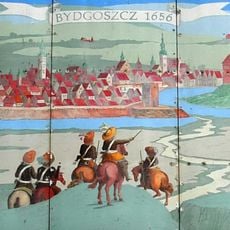
Gród bydgoski, Medieval fortified settlement in Bydgoszcz, Poland.
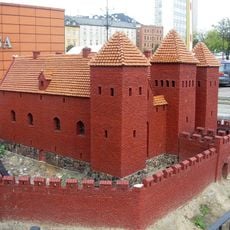
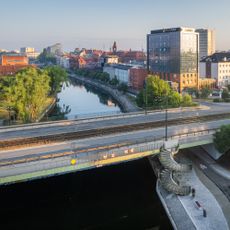
Gród bydgoski was a fortified medieval settlement with wooden defensive walls, residential buildings, and a moat system positioned along the Brda River. The location allowed it to control an important crossing point on a major trade route through the region.
The settlement was founded between 1037 and 1053 under Casimir I the Restorer and served as a strategic control point for river crossings. It played an important role in the early consolidation of Polish state power in this region.
The name refers to a settlement built on elevated ground, reflecting its original layout and defensive purpose. Visitors today encounter artifacts in local museums that reveal what daily life was like for the people who lived here.
The remains of the settlement are located in the center of modern Bydgoszcz, preserved underground through layers of urban development. Archaeological discoveries are displayed in local museums where visitors can learn more about excavations and finds from the site.
The wooden structures remained unusually well preserved over ten centuries, thanks to special soil conditions that normally would cause decay. This natural conservation allowed archaeologists to gain rare insights into the material culture of the medieval period.
The community of curious travelers
AroundUs brings together thousands of curated places, local tips, and hidden gems, enriched daily by 90,816 contributors worldwide.