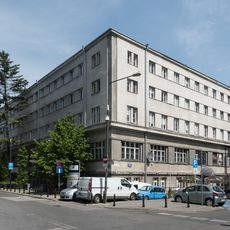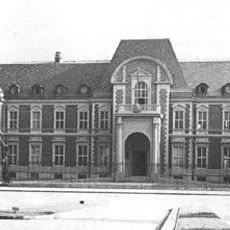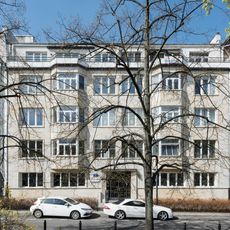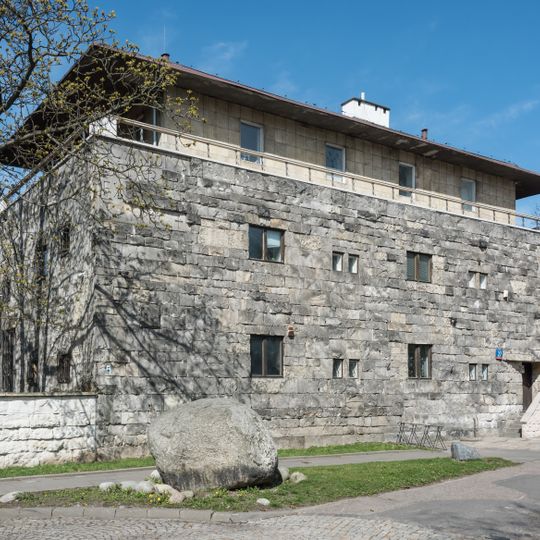
Willa Pniewskiego, Villa and immovable monument in Śródmieście, Poland.
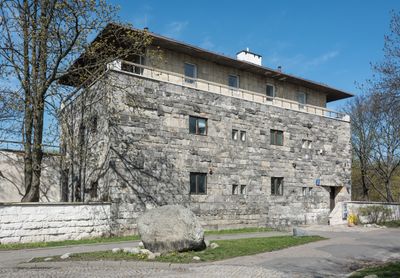
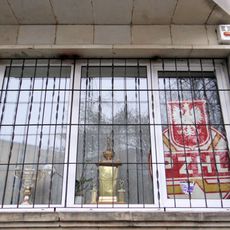
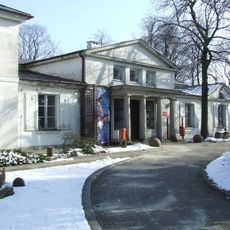
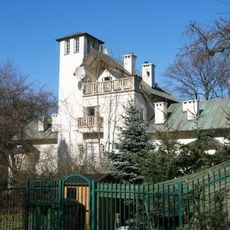
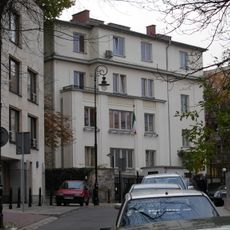
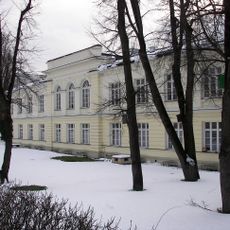
Willa Pniewskiego is a residential building in Warsaw's central district featuring rough stone walls and irregular window openings along Aleja Na Skarpie 27. Since 1966, it has housed the Museum of Earth, operated by the Polish Academy of Sciences with displays related to geological and planetary science.
The building was originally constructed between 1779 and 1781 as a Masonic lodge pavilion, but architect Bohdan Pniewski acquired and extensively renovated it during the 1930s. During the Warsaw Uprising in 1944, it suffered significant damage while serving as a refuge, before later being restored for its scientific mission.
The villa takes its name from Bohdan Pniewski, the architect who transformed it during the 1930s and filled it with personal artistic choices. Inside, traditional Polish decorative elements such as folk bowls and ceramic tiles show the owner's taste and connection to craft traditions.
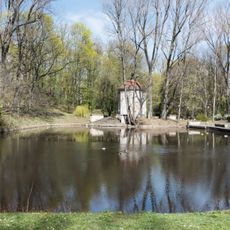
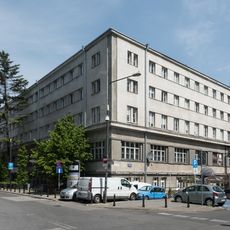
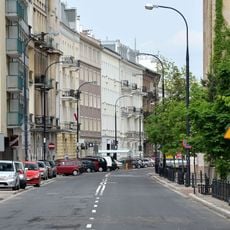
The building sits in an older part of the city with walking paths that connect to other museums and monuments, making it a good spot for a cultural walk. Access is straightforward, and the surroundings offer several routes for visitors interested in exploring the neighborhood further.
Blood stains from uprising fighters in 1944 remain visible on the staircase, showing how directly combat took place inside this building. This silent reminder often surprises visitors and brings home the reality of urban warfare during that difficult period.
The community of curious travelers
AroundUs brings together thousands of curated places, local tips, and hidden gems, enriched daily by 91,683 contributors worldwide.