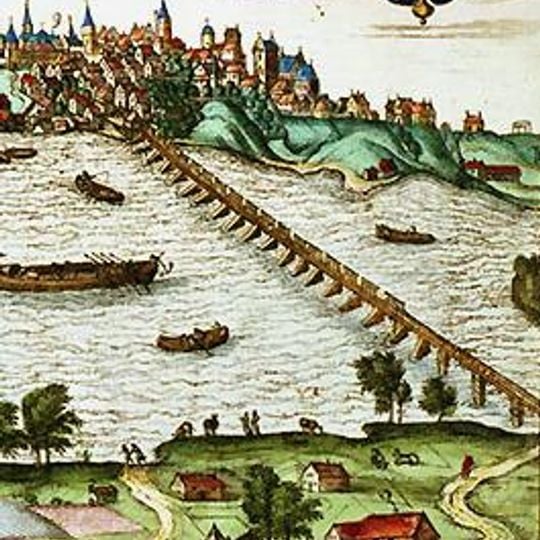
Sigismund Augustus Bridge, Renaissance wooden bridge across Vistula River in Warsaw, Poland
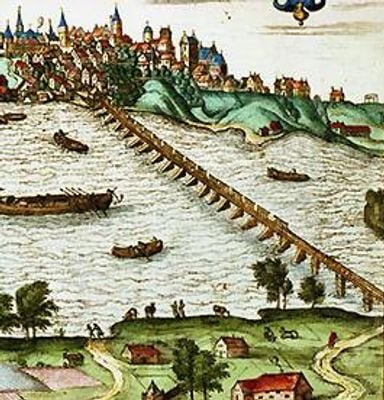
Sigismund Augustus Bridge was a wooden structure spanning roughly 500 meters across the Vistula River with multiple sections supporting the crossing. The construction included a movable opening mechanism in the center that allowed boats to navigate upriver and downriver while pedestrians used the walkway.
Construction began in 1568 under King Sigismund II Augustus and was completed in 1573, making it the longest wooden bridge in Europe at that time. The structure served the city for roughly 30 years until ice floes destroyed it in 1603.
The bridge transformed how people in Warsaw crossed the river daily, replacing ferries with a permanent walkway that shaped the city's growth and movement patterns. This shift changed the rhythm of life for residents who could now move more freely between neighborhoods.
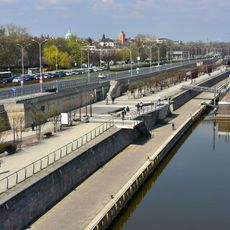
Visitors should know this was a historic structure that no longer exists, so today only remnants and historical representations remain visible. Museums and historical records throughout Warsaw provide more information about the original and its importance to the city.
The project consumed enormous funds from the royal treasury and was led by an Italian architect, showing just how important it was to the city at that time. The blend of craftsmanship, design, and innovation made it a remarkable undertaking for its era.
The community of curious travelers
AroundUs brings together thousands of curated places, local tips, and hidden gems, enriched daily by 90,977 contributors worldwide.