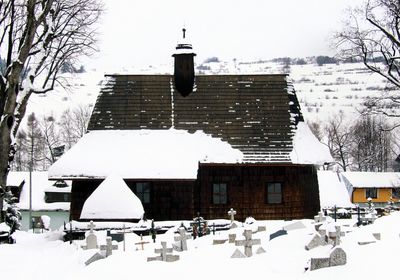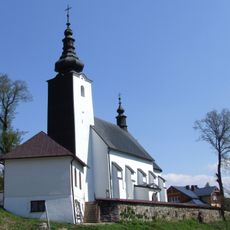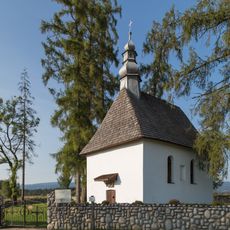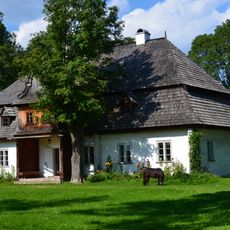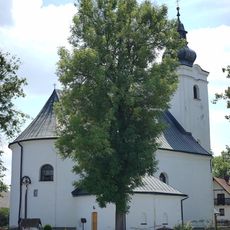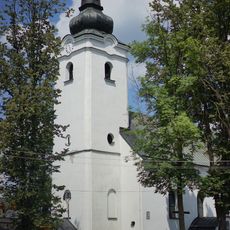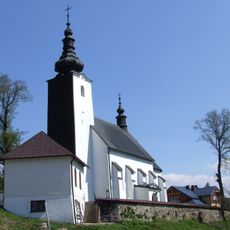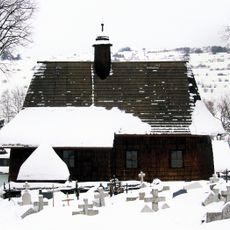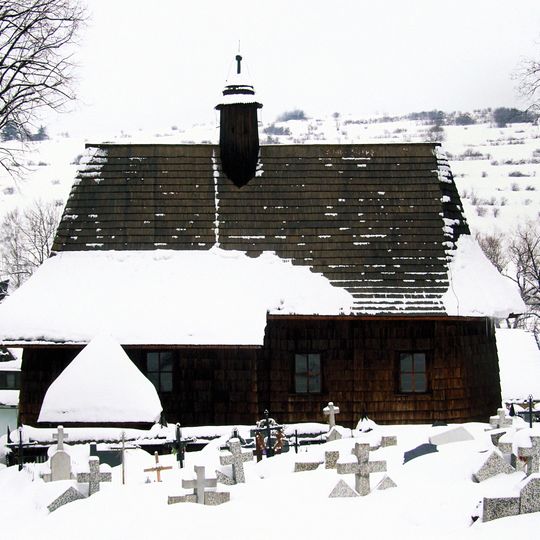
Kościół św. Elżbiety Węgierskiej w Trybszu, 16th-century wooden church in Trybsz, Poland
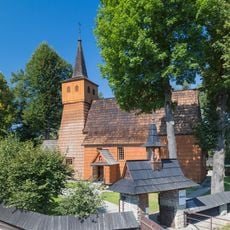
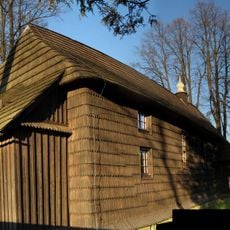
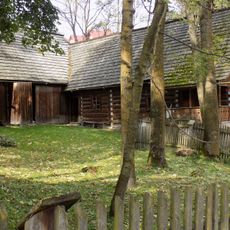
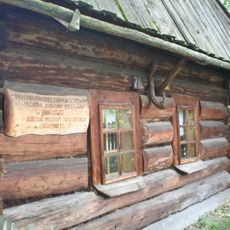
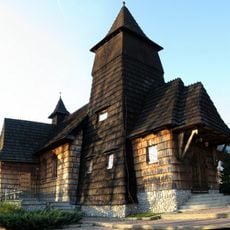
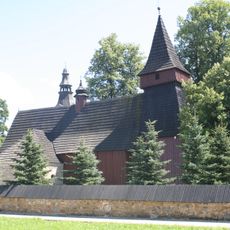
The Church of Saint Elizabeth of Hungary in Trybsz is a small log-built church with an elongated, three-sided closed presbytery and a wider nave, with a small porch on the south side. The presbytery has sloping shingle walls, rare in wooden architecture, intended to prevent collapse. The whole is covered by a multi-pitched shingle roof with a bell turret. Inside, a flat ceiling covers the presbytery, while the nave has curved walls.
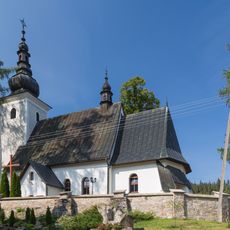
Built in 1567 from larch wood without nails, the church was renovated and refurnished in the first half of the 17th century, when an unknown author painted the wall polychrome in 1647. It stopped serving as a place of worship at the start of the 20th century after a new brick church was built beside it. Repairs in 1924 removed the tower and sacristy, followed by further work in 1936, 1972 and 1976.
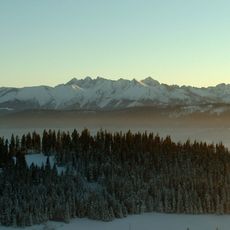
The late Baroque polychrome of 1647, painted by an unknown author, covers the walls and flat ceiling with scenes from the lives of Jesus, Mary and the saints. On the ceiling is a Last Judgment whose background holds the oldest panorama of the Tatra Mountains in Poland. The church now serves as a museum on the Wooden Architecture Trail.
The church stands on the Wooden Architecture Trail of Małopolska and is open to visitors in the summer season, from May to September. Entry is free, with donations going to maintenance and restoration. Visitors dress modestly and remove their shoes before entering; photography inside is allowed but without flash.
The flat ceiling of the nave carries a late-Baroque Last Judgment painted in 1647 by an unknown artist; behind the scene is the oldest panorama of the Tatra Mountains in Poland. The sloping shingle walls of the presbytery, built to keep it from collapsing, are rare in regional carpentry.
The community of curious travelers
AroundUs brings together thousands of curated places, local tips, and hidden gems, enriched daily by 94,700 contributors worldwide.