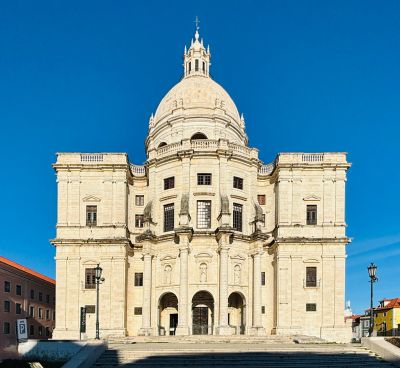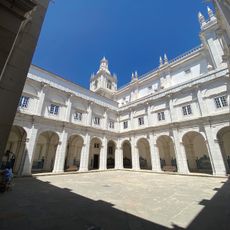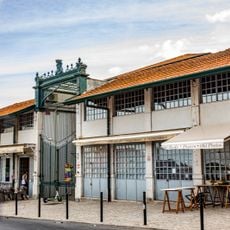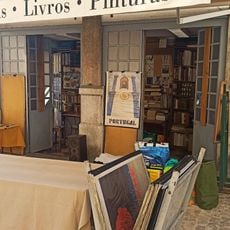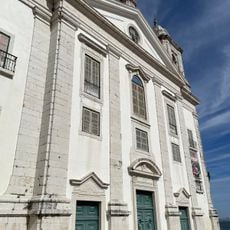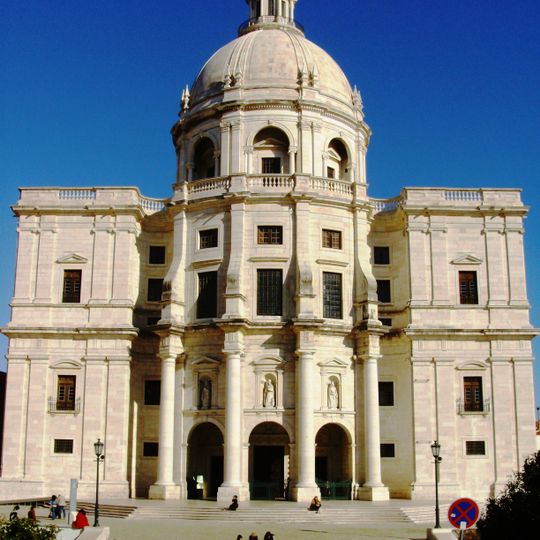
Church of Santa Engrácia, Baroque church and national pantheon in Alfama, Lisbon, Portugal
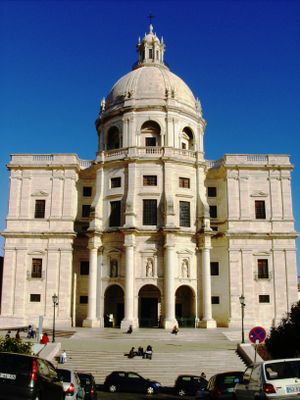
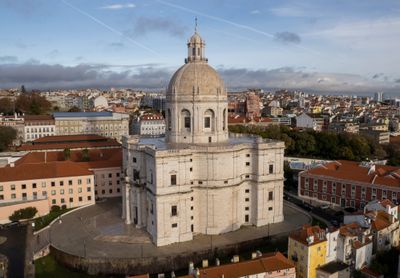
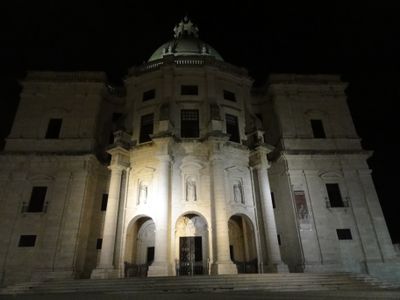
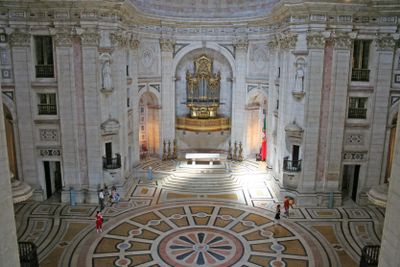
The Church of Santa Engrácia has a Greek-cross plan with a central dome on a drum of paired columns and arched openings, topped by a lantern with a cross. Its white stone facades are undulated, with square towers at the corners and a main portal bearing Portugal's coat of arms held by two angels. The interior features polychrome marble floors and walls and an 18th-century organ brought from Lisbon Cathedral.
A first church on the site, sponsored around 1568 by Infanta Maria, daughter of King Manuel I, collapsed in a storm in 1681. The present building was begun in 1682 to a design by royal architect João Antunes and left unfinished when he died in 1712, as King John V diverted funds to the Convent of Mafra. In 1916 it was converted into the National Pantheon, and the dome was only completed in 1966.
The pantheon holds tombs of Portuguese figures whose names are engraved in stone throughout the interior. These names represent poets, explorers, and musicians who shaped Portuguese history and memory.
Access from the hill involves some stairs, but once inside the layout is straightforward to navigate. Clear signage and staff are available to direct you toward the main burial sites.
The building's prolonged construction inspired a Portuguese saying still used today to describe projects that drag on indefinitely. The phrase 'obras de Santa Engrácia' lives on in everyday conversation.
The community of curious travelers
AroundUs brings together thousands of curated places, local tips, and hidden gems, enriched daily by 93,238 contributors worldwide.