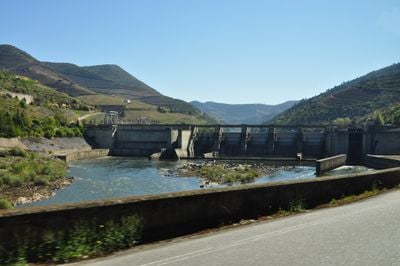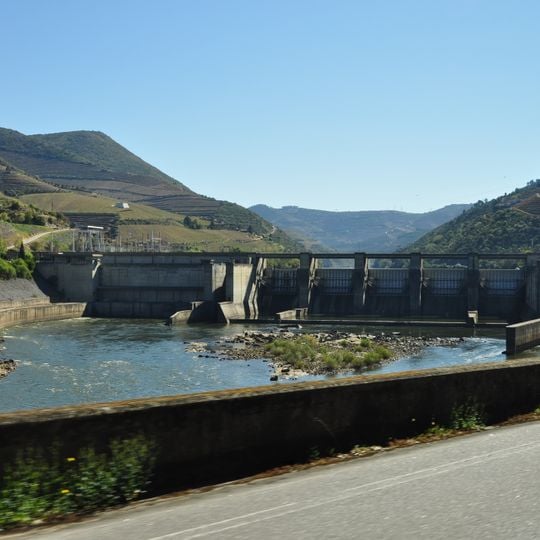
Régua Dam, Hydroelectric power station in Peso da Régua, Portugal
The Régua Dam stretches 350 meters across the Douro with concrete walls rising 41 meters high and creates a reservoir about 73.5 meters deep. Three Kaplan turbines inside generate about 180 megawatts of electricity to power communities across northern Portugal.
Construction began in 1965 and finished in 1973, marking a major step forward in Portugal's energy infrastructure during the 20th century. The project was part of a wider plan to harness the Douro through a series of dams for modern power generation.
The dam represents how the Douro River transformed from a wine transport route into an energy source, a shift that shaped the region's identity. This change shaped how local people relate to the river and their landscape.
It is best reached from Peso da Régua, where a viewing area lets you see the structure and how the facility works. Coming early in the day gives you the best views of the dam and reservoir.
The dam has a navigation lock that allows boats up to 83 meters long to pass through, keeping river traffic alive. This means it balances power generation with keeping the old tradition of river transport going.
The community of curious travelers
AroundUs brings together thousands of curated places, local tips, and hidden gems, enriched daily by 90,833 contributors worldwide.