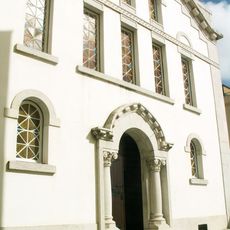
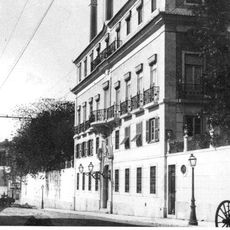
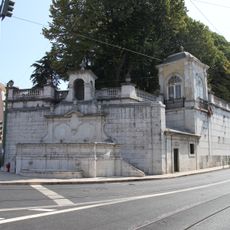
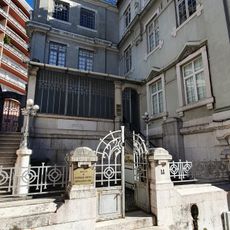
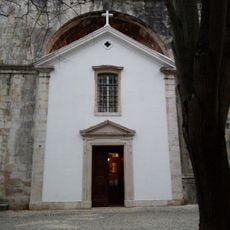
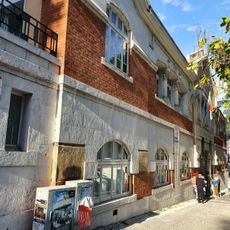
Reservatório da Mãe d'Água das Amoreiras, Water reservoir and museum in Campo de Ourique, Portugal.
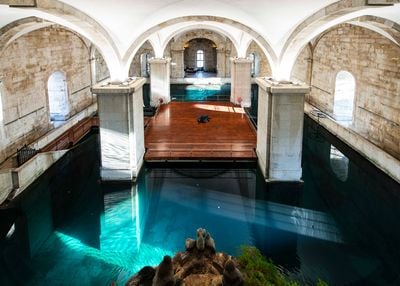
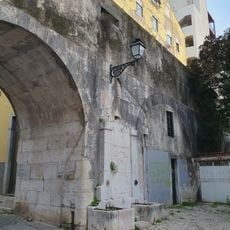
The Reservatório da Mãe d'Água das Amoreiras is an underground water tank and museum in Campo de Ourique that collected water from the Águas Livres Aqueduct. The structure displays impressive engineering with grand stone arches and a raised foundation, showing how people solved the challenge of storing water at scale in the 1700s.
The Hungarian architect Carlos Mardel designed this structure in 1746 to capture water from the aqueduct, though construction took nearly a century to finish in 1834. This long timeline reflects how difficult it was to build such complex water systems in that era.
This site was the nerve center of Lisbon's water system, controlling where water flowed to public fountains, workshops, and homes. Walking through it today, you can understand how people in the 18th century managed something as basic as getting clean water to their doorstep.
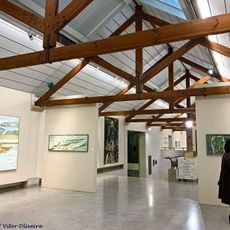
The museum lets you walk through the underground spaces and learn how water systems operated centuries ago. Dress warmly since the underground areas are cool, and wear sturdy shoes because the stone floors can be slippery and uneven.
The underground chamber is roughly 25 feet (7 to 8 meters) deep and continued to supply water to the city until the 20th century before becoming a museum. This second life shows how old infrastructure can be repurposed for new generations to learn from.
The community of curious travelers
AroundUs brings together thousands of curated places, local tips, and hidden gems, enriched daily by 60,000 contributors worldwide.