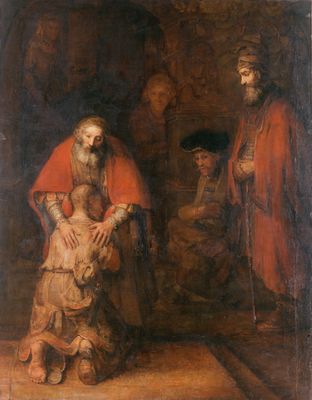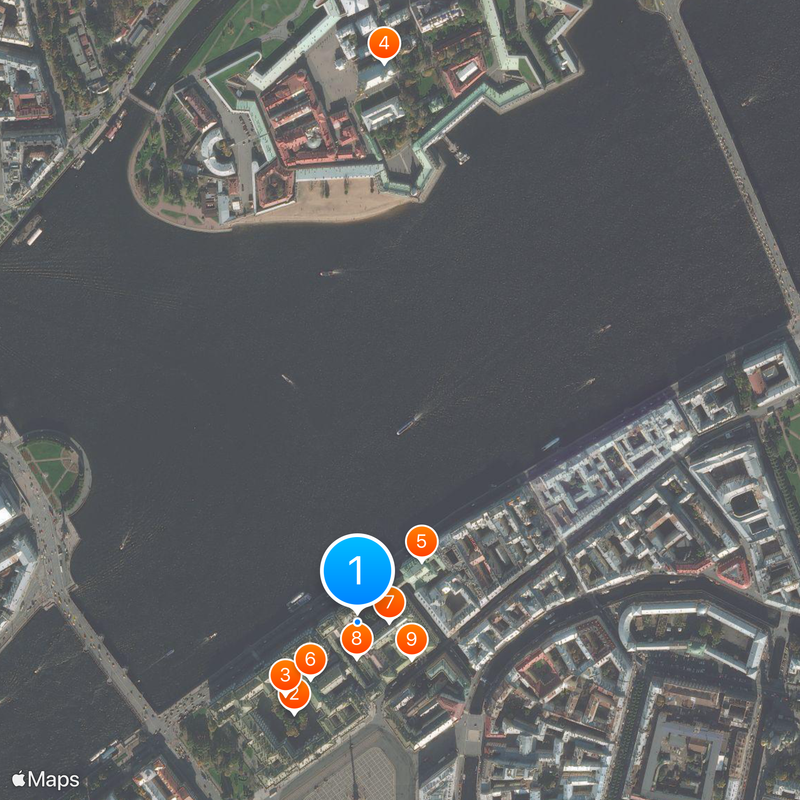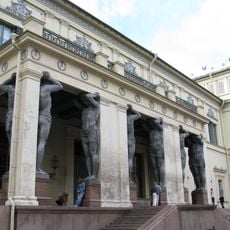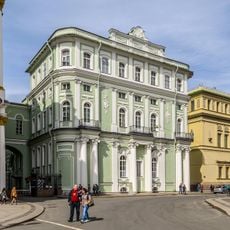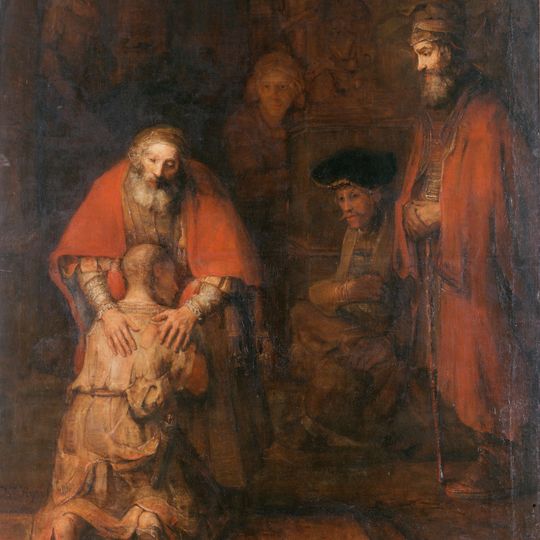
The Return of the Prodigal Son, Oil painting at Hermitage Museum, Russia.
The painting shows a scene with three figures, where a kneeling son in tattered clothes is embraced by an older man, while another onlooker stands in the background on the right. The palette consists of warm earth tones and gold, with a beam of light falling on the two central figures.
Rembrandt painted this work in his final years between 1665 and 1668, while he struggled with personal loss and poverty in Amsterdam. The Hermitage acquired the work in 1766 from a French collection for Catherine the Great.
The work holds a central place in the Dutch collection and shows a parable from the Gospel of Luke about forgiveness and unconditional love. Visitors often linger before this depiction where a father receives his lost son in a silent embrace.
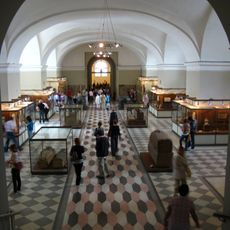
The work hangs in one of the halls for Dutch masters, where you should keep enough distance to take in the full format. Mornings are often quieter, allowing you to examine the layers of color and brushwork up close.
The father's hands appear different: the left looks strong and protective, while the right is softer and more caring. This asymmetry invites different readings, from a symbolic union of masculine and feminine care to a technical choice by the painter.
The community of curious travelers
AroundUs brings together thousands of curated places, local tips, and hidden gems, enriched daily by 91,360 contributors worldwide.