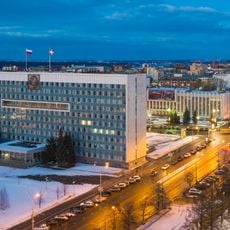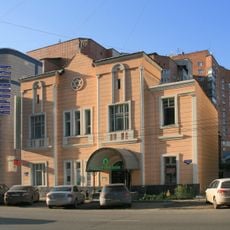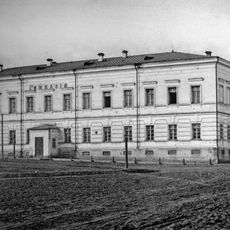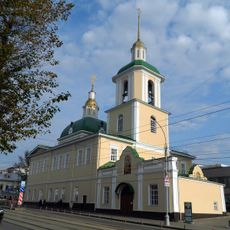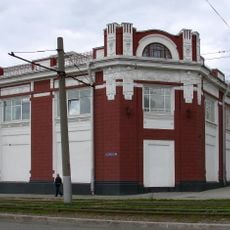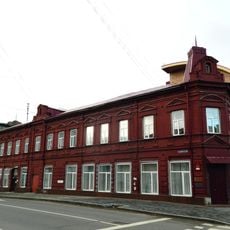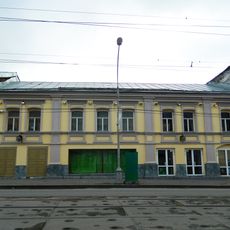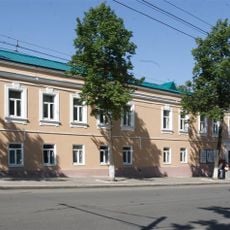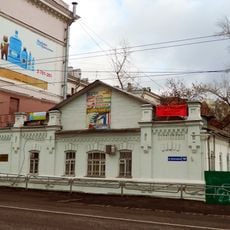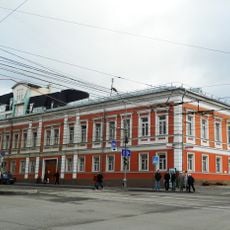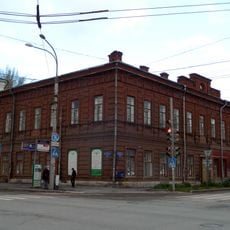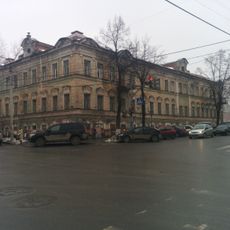
Black Market in Perm, Regional cultural heritage site and marketplace in Perm, Russia.
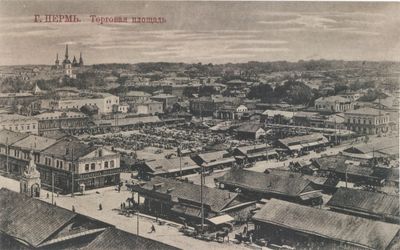
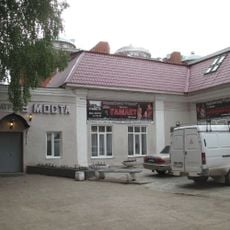
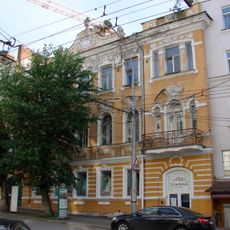
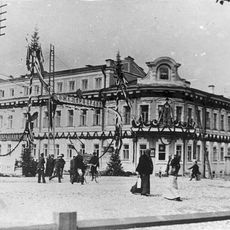
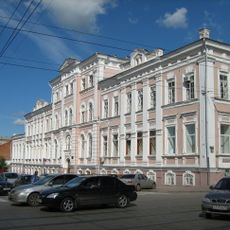
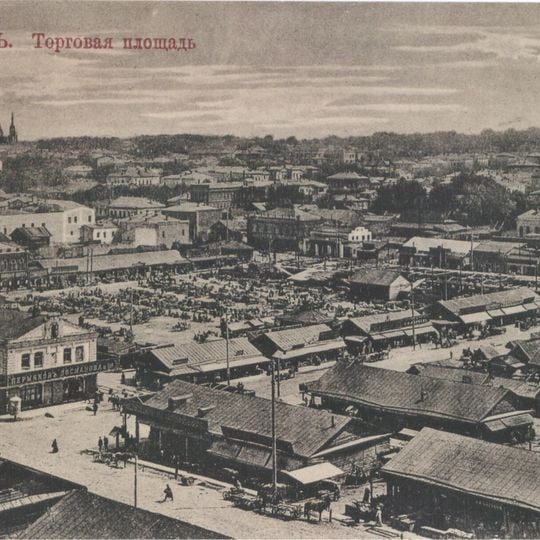
The Black Market, also called the Bread Market, was a large trading centre of Perm in the 19th and early 20th centuries. Its stone trading arcades, built in 1890, 1899 and 1913, stand on the former square between the present Sovetskaya and Pushkin streets. Part of the site is now the Square of the Ural Volunteers.
The market formed in the 1730s–1740s near the mouth of the Egoshikha, where Perm I station now stands, and moved to the Main Square as the city grew. In 1824, part of the trading rows was transferred to a swampy site at Krasnoufimskaya and Petropavlovskaya streets for Alexander I's military parades. Drainage ditches dug in 1825 and additional filling through 1871 failed to dry the mud, which gave the place its name. The market closed by 1929, though fairs continued until the late 1940s.
The name came from the thick black mud that covered the boggy ground and resisted drainage. Trade was organised in named rows — obzhorny for ready food, fish, salt, pretzel, soap, vegetable — and a huge icehouse built in 1888 under the hill kept meat and fish cold, filled each spring with ice cut on the Kama.
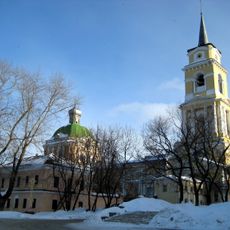
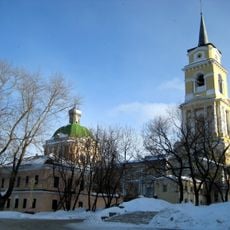
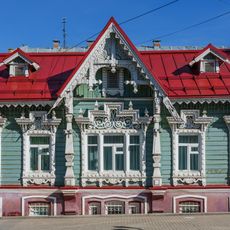
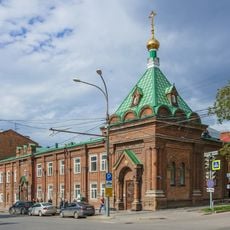
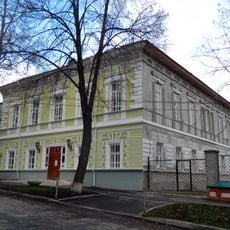
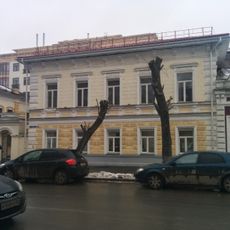
The market no longer exists: it closed by 1929, and its site is now the Ural Volunteers square, bounded by Sovetskaya and Kuibyshev streets. The surviving trading arcades stand as listed monuments, and the 1883 fire tower at Sovetskaya and Kuibyshev is still used by a fire brigade. The nearby Izholdin trading house is a regional monument.
The market's name came from the thick black mud that covered the boggy ground and proved hard to clear. Drainage ditches lined with wood were dug in 1825, and the square was raised with embankments and log causeways, yet it stayed muddy for decades.
The community of curious travelers
AroundUs brings together thousands of curated places, local tips, and hidden gems, enriched daily by 94,466 contributors worldwide.