Yuraktau, Mountain summit in Ishimbaysky District, Russia
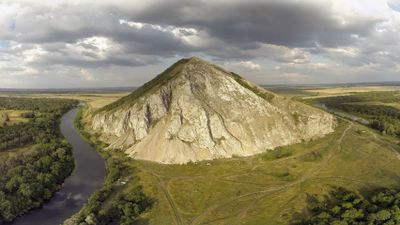
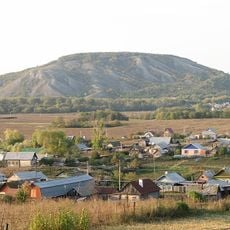
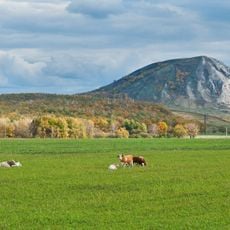
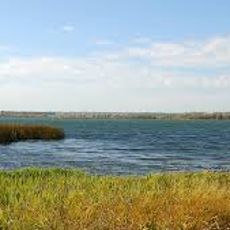
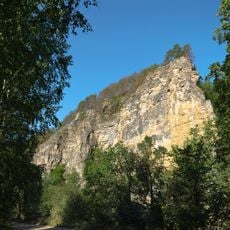
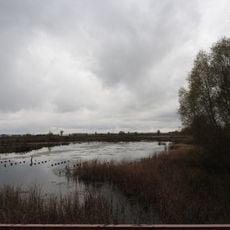
Yuraktau is one of the four shihans, a solitary conical hill 1 km long and 850 m wide that rises 338 m above sea level, 220 m above the Belaya River. Its slopes of 20–30 degrees carry no rocky ledges, and scree covers the lower part. Springs emerge at the base of the northern slope, and Lake Moksha lies at the foot.
The mountain formed over 230 million years ago as a reef structure in a tropical sea during the Lower Permian period of the Late Paleozoic era. This geological origin shaped the rock formations visible on the peak today.
The Bashkir name Yöräktau means "heart mountain", from yöräk (heart) and tau (mountain). The four Sterlitamak shihans are named for their shapes; Yuraktau's conical profile suggested a heart to local herders. In 1707 the slopes were the site of a ten-day battle of Bashkir rebels under Kusyum Tyulekeyev against government troops.
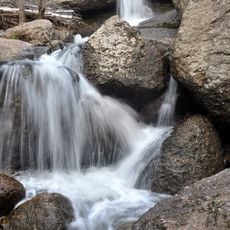
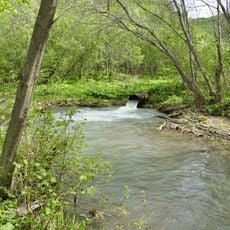
Multiple springs emerge from the northern slope, with one containing sulfur compounds, while Lake Moksha lies at the mountain's base. The Belaya River flows about 220 meters below, shaping the landscape around the peak.
In 1707, at the foot of Yuraktau, Bashkir rebels led by Kusyum Tyulekeyev fought government troops for about ten days and won; around 400 soldiers were taken prisoner and Khokhlov fled toward Tabynsk. The mountain is one of four shihans, and the Bashkir Soda Company and Russian authorities have been named as a threat to the natural monument.
The community of curious travelers
AroundUs brings together thousands of curated places, local tips, and hidden gems, enriched daily by 93,973 contributors worldwide.