Berkhomut, Natural monument in Ishimbaysky District, Russia.
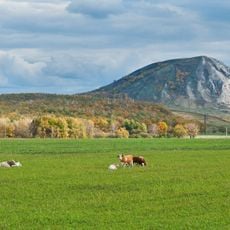
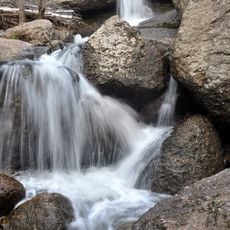
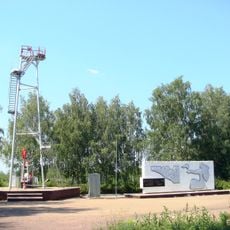
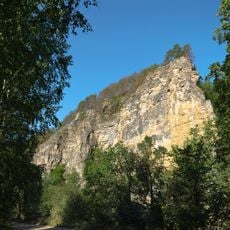
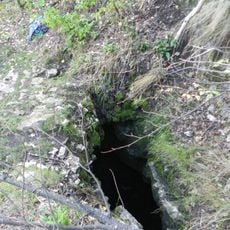
Berkhomut is a karst spring of the rising-pressure type, 600 m south of Khazinovo in Ishimbaysky District. It emerges from the carbonate rocks of Mount Tirmen-Tau at an absolute elevation of 219.5 m, with hydrocarbonate-calcium water. Since December 1973 part of the spring has been capped by a concrete sarcophagus and its water piped 50 km to Sterlitamak, so the spring itself is no longer visible.
In 1770 the naturalist Ivan Lepyokhin recorded an earthen dam about 4 m high at the spring, powering a mill with two millstones. A 25 kW hydroelectric station was built here before the Great Patriotic War. In December 1973 part of the spring was capped with a concrete sarcophagus and its water piped 50 km to Sterlitamak.
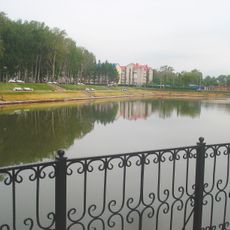
The name Berkhomut (Bashkir Bergamyt) comes from a legend: a local man's horse drowned in a nearby lake, and its bridle was later found in the spring. Until 1973 the water flowed into the Khazhinovskaya Shida and then the Salauka; it is cold and sweet-tasting, and the Berkhomut beer is brewed from it.
The spring lies 600 m south of Khazinovo in Ishimbaysky District. Since December 1973 its water has been capped under a concrete sarcophagus and piped 50 km to Sterlitamak, so the spring itself can no longer be seen; the outflow reaches the Khazhinovskaya Shida. Plan to view the site from outside the capped structure.
The spring's name comes from a Bashkir legend: a local man's horse drowned in a nearby lake, and its bridle (bergamyt) was later found in the spring. Since December 1973 a concrete sarcophagus has capped part of the spring, and its water is piped 50 km to Sterlitamak, so the spring itself can no longer be seen.
The community of curious travelers
AroundUs brings together thousands of curated places, local tips, and hidden gems, enriched daily by 94,341 contributors worldwide.