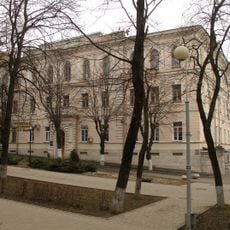
Constantinogorsk Fortress, Military fortress in Pyatigorsk, Russia
Constantinogorsk Fortress is an earthen fortification begun in 1780 at the confluence of the Zolotukha and Podkumok rivers, about 5 versts west of Mount Mashuk and 4 versts south of Mount Beshtau. It was built under Lieutenant-General I. V. Jacobi to a plan by Lieutenant-Colonel Hermann von Fersen, with bastions and semi-bastions armed with cannon. Its area was about three desyatins.
The fortress was built between 1780 and 1783 and later became headquarters for the Tenginsky Regiment starting in 1819. It marked a geographic boundary between Western and Eastern Caucasus and served as a control point during Russian expansion in the region.
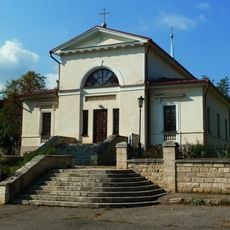
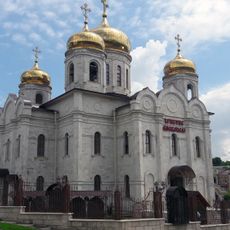
The fortress was a center of Russian military presence in the Caucasus, housing a wooden church built in 1783 for the garrison and officers stationed there. This building shows how soldiers maintained their faith during long postings on the frontier of the empire.
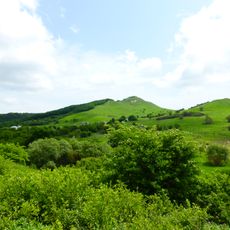
The fortress stood on the terrace above the floodplain at the confluence of the Zolotukha and Podkumok, 5 versts west of Mount Mashuk and 4 versts south of Mount Beshtau, on the site of today's Novopyatigorsk. The low meadows around it flooded in spring and were difficult bogs the rest of the year, so approach from the higher ground.
The fortress was the first permanent Russian military structure in the Pyatigorye area, built on a terrace above the floodplain where the Zolotukha meets the Podkumok. Its site was chosen so that flooded lowlands and impassable marshes enclosed it on three sides in spring, leaving only one approach.
The community of curious travelers
AroundUs brings together thousands of curated places, local tips, and hidden gems, enriched daily by 93,687 contributors worldwide.