Kungsparken, Urban park in central Malmö, Sweden.
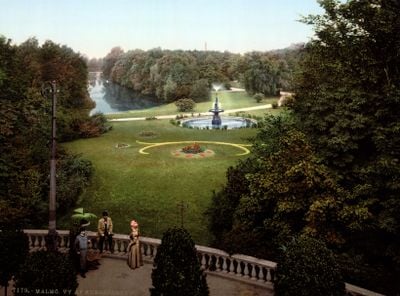
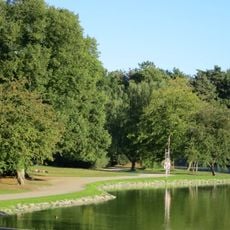
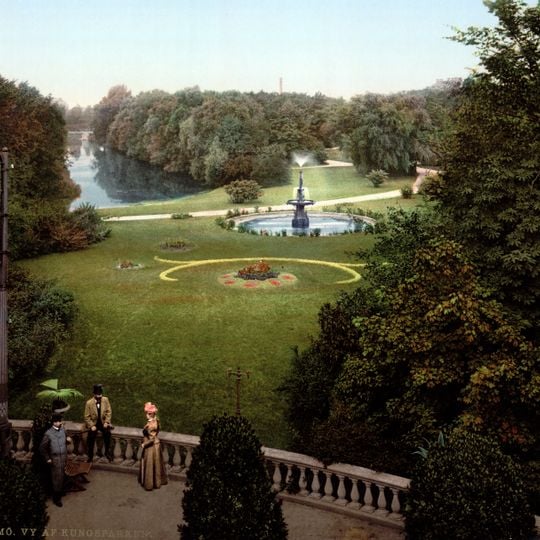
Kungsparken is Malmö's oldest park, covering 8.4 hectares around Malmöhus Castle. A straight gravel path crosses the lawn, with a narrow canal on one side. At the centre, a circular stone basin holds a tiered cast-iron fountain from 1882, and nearby a ring of red flowers is set within a yellow-and-green elliptical border.
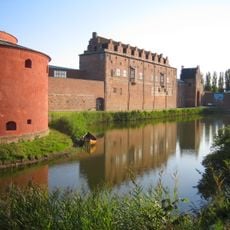
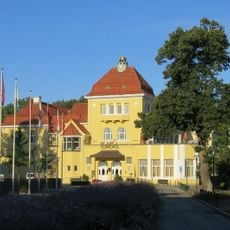
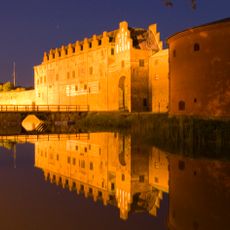
The land was built over until the 1660s, when buildings were demolished to clear a free field of fire from Malmöhus fortress. The park was laid out in 1869–1870 on former fortification ground to a design by Danish landscape architect Ove Høegh Hansen, inspired by the English park style, and opened in 1872 as Slottsparken. It took the name Kungsparken after King Oscar II inaugurated a restaurant there in 1881 during a large agricultural meeting in Malmö; the name was later shortened from Kung Oscars park.
The park follows English garden design with open lawns flowing into denser tree clusters and meandering paths. Visitors experience this natural layout today through the informal arrangement of plantings and waterways.
The area is easily accessible on foot with multiple rest spots and a food and drink venue on the southeast side. The pathways are well-established and the entire park is comfortable to walk through.
The cast-iron fountain placed in the park's centre in 1882 is fed by a water system that also supplies the nearby Grottan grotto, rebuilt in 1987 with a snake's head, Ormet, spouting a thin jet into a granite basin. The grotto's theme comes from Snorri's Edda, the punishment of Loki for the killing of Baldr; landscape architect Monika Gora received the Stenpriset award in 1988 for the work. The park holds 120 tree species from three continents, many replanted for the Bo 86 building exhibition.
The community of curious travelers
AroundUs brings together thousands of curated places, local tips, and hidden gems, enriched daily by 93,807 contributors worldwide.