Palladium, Arts centre and former cinema in Malmö, Sweden
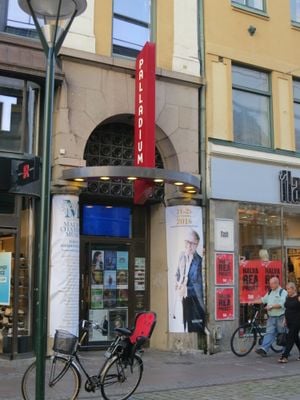
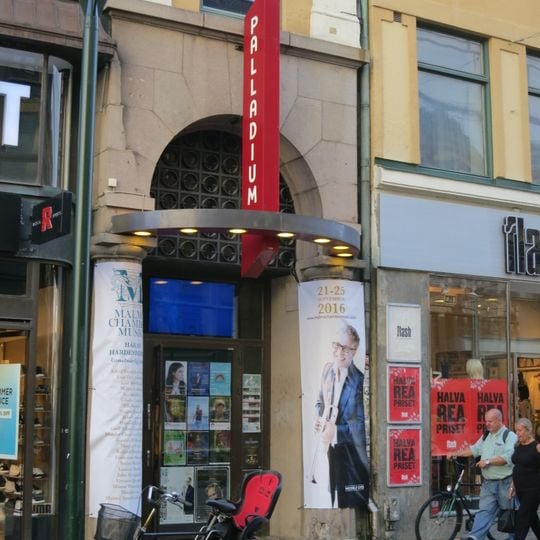
Palladium is a cultural building at Södergatan 15 in central Malmö, opened in 1920 and designed by August Stoltz. Its interior preserves the Guldfoajén (gold foyer) with marble floors and walls, large crystal chandeliers, and ceiling paintings by Edmund Stoltz depicting "Forntid", "Medeltid", "Nutid" and "De sköna konsterna" in vaulted passages of dark brown oak paneling. The auditorium seats about 530 or holds up to 850 standing.
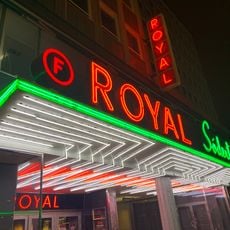
Gustaf Löfberg abandoned plans for a glass and porcelain factory on the plot and instead built the Palladium, designed by August Stoltz and opened in 1920 with 1,044 seats, a royal box and a marble foyer. It served mainly as a cinema until 1996, when Bille August's film Jerusalem was the last screening. In 2002 Region Skåne began converting it into a dance and music stage, reopened on 14 February 2004.
The venue shapes cultural life in Malmö by hosting a wide range of performances from classical music to contemporary dance and world music. Visitors experience a diverse program that brings together local and international artists, making it an important gathering place for those interested in the arts.
The venue is located in central Malmö, making it easily accessible when exploring the city center. The on-site restaurant offers dining options, particularly during performances, and conference spaces can be reserved for various occasions or private gatherings.
The foyer walls and floor are made of marble, and the Guldfojén (gold foyer) holds a large genuine Persian carpet beneath specially ordered crystal chandeliers. The ceiling paintings by Edmund Stoltz depict "Forntid", "Medeltid", "Nutid" and "De sköna konsterna" in vaulted passages of dark brown oak panelling.
The community of curious travelers
AroundUs brings together thousands of curated places, local tips, and hidden gems, enriched daily by 93,947 contributors worldwide.