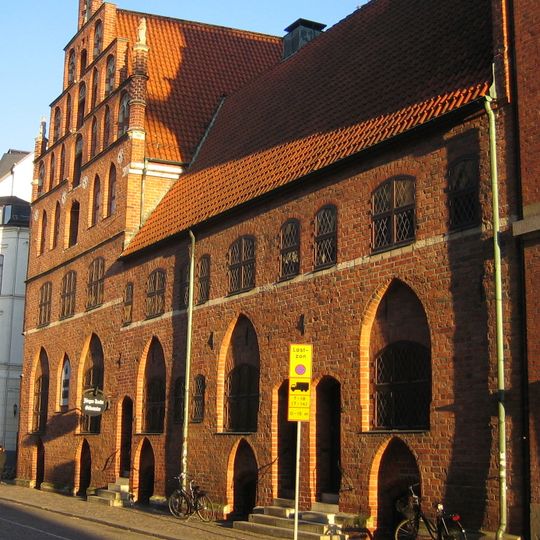
Kockska huset, 16th-century architectural ensemble in Old Town, Malmö, Sweden.
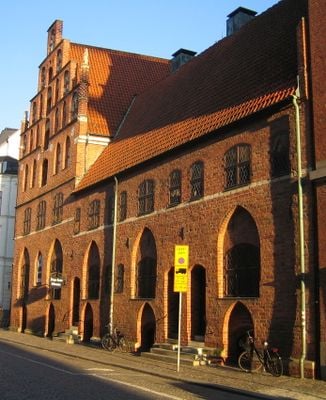
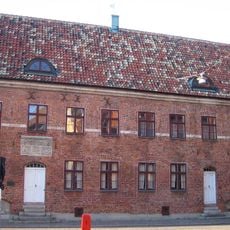
Kockska huset is a red-brick building complex at Västergatan 2 in Malmö, built 1522–1525 for Jørgen Kock. The corner house has a tall, steep red-tiled roof with a small ridge turret and rows of tall windows with light stone trim. The lower wing facing Stortorget has large pointed-arch windows framed in pale stone. The facade bricks came from Kock's own brickworks and were originally painted with red lime paint, with whitewashed niches.
Jørgen Kock bought the plot from Sorø Abbey in 1522 and built the complex between 1522 and 1525; in 1526 he moved Denmark's coin production into it. King Gustav Vasa stayed here for a week in August 1524 during the Treaty of Malmö. After Kock's death in 1556 the estate passed through noble families, and from 1770 the merchant Frans Suell ran a tobacco factory on the property.
The cellar vaults now house the restaurant Årstiderna, while other rooms are used for conferences. The building is named after Jørgen Kock, mint master for all of Denmark and mayor of Malmö, whose coat of arms and that of his wife Citze appear above an attic hatch and on the two lions flanking the gable.
The building sits on Västergatan in central Malmö and can be viewed from the outside any day of the week. The restaurant inside welcomes visitors who wish to dine there and experience the space firsthand.
The decorative gable figures on the corner house are replicas; the originals are kept at the Malmö Museum. The Virgin Mary on the corner, standing on a crescent moon with the infant Jesus, was carved in 2018 by Vitus Nielsen from Gotland sandstone, and the pedestal bears the date 1525.
The community of curious travelers
AroundUs brings together thousands of curated places, local tips, and hidden gems, enriched daily by 93,605 contributors worldwide.