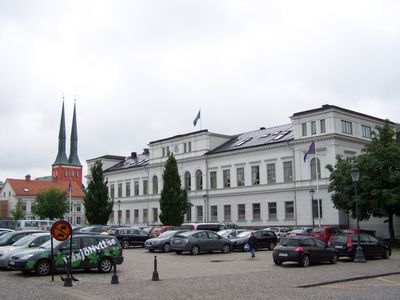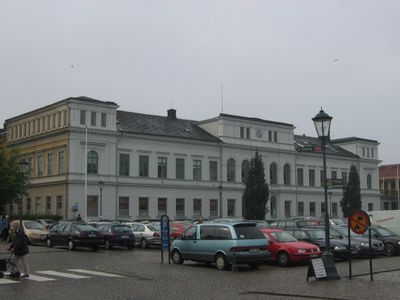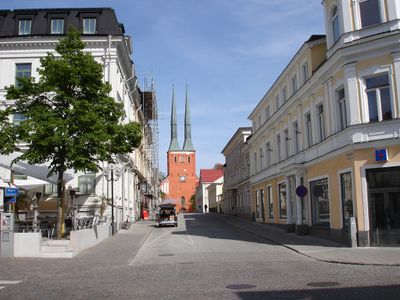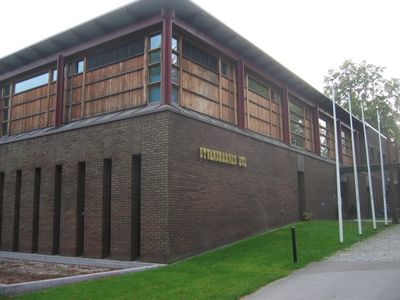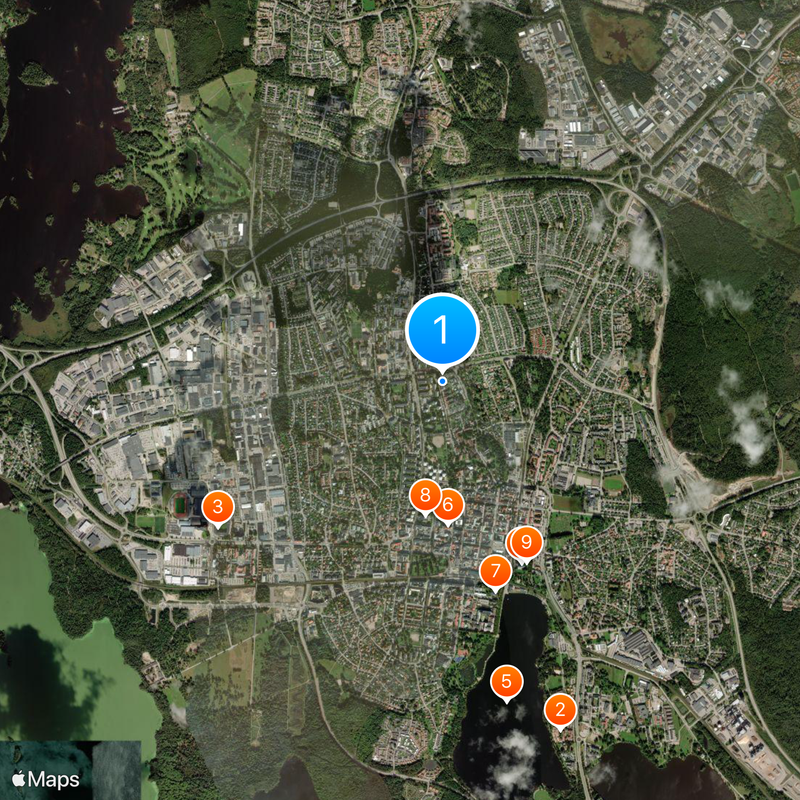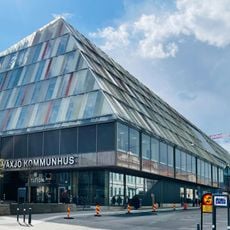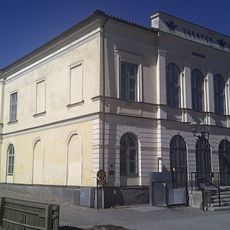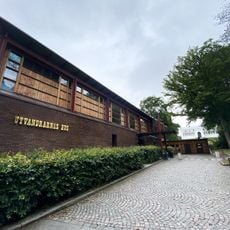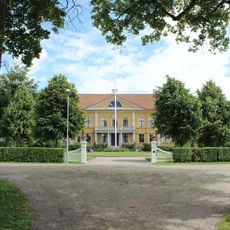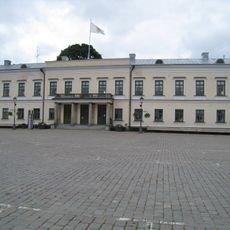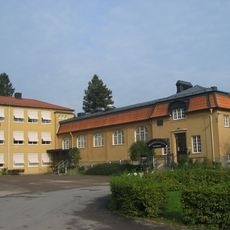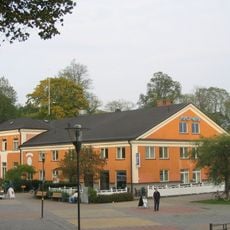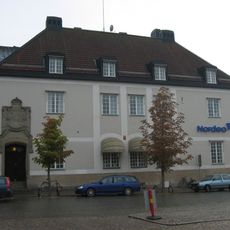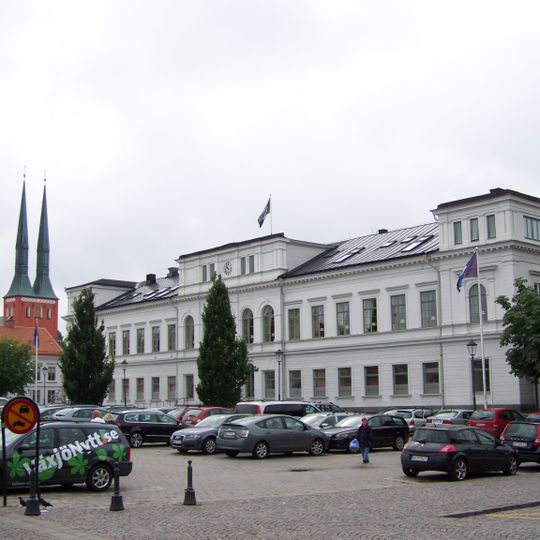
Växjö, University center in Växjö Municipality, Sweden.
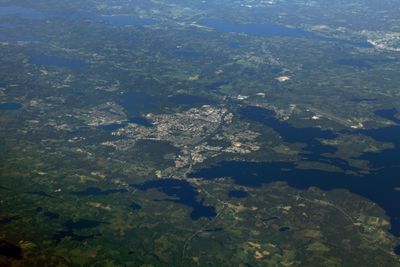
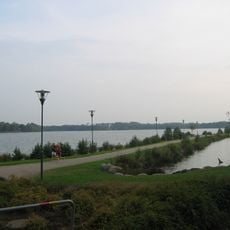
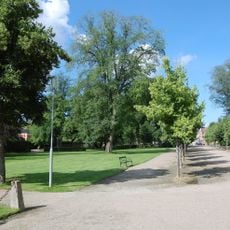
Växjö is an urban area in Växjö Municipality, Sweden, spreading across several lakes and forested areas at an elevation of 167 meters (548 feet). The city blends green spaces and parks with residential and commercial districts, forming a compact urban structure with forest and water at its edges.
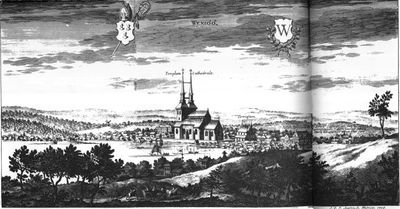
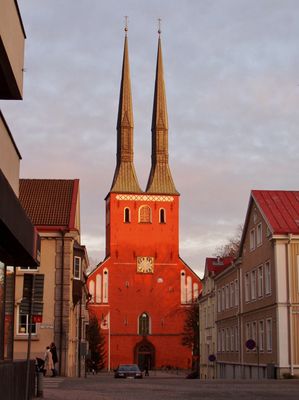
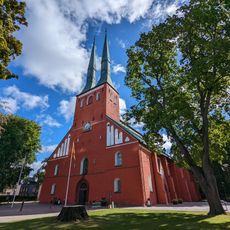
Magnus Eriksson granted the city its charter in 1342, establishing it as an episcopal center. The Cathedral of Saint Sigfrid, built around 1300, served as an early ecclesiastical core that solidified the city's religious importance in the region.
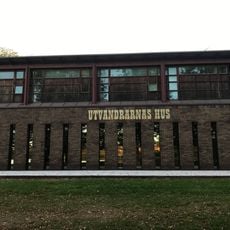
The Swedish Emigrant Institute preserves documents and belongings from the period between 1846 and 1930, when many Swedes departed for North America. Visitors can explore passenger lists, letters and personal keepsakes documenting the journeys and experiences of emigrants.
The city connects by regional train along the Coast to Coast line and through Växjö/Kronoberg Airport. Cycling paths cross the municipality and offer an alternative for shorter trips within and between neighborhoods.
The city reduced its fossil fuel consumption by implementing renewable energy in public and private buildings. This commitment to sustainable development now shapes the energy infrastructure and urban planning across the municipality.
The community of curious travelers
AroundUs brings together thousands of curated places, local tips, and hidden gems, enriched daily by 92,778 contributors worldwide.