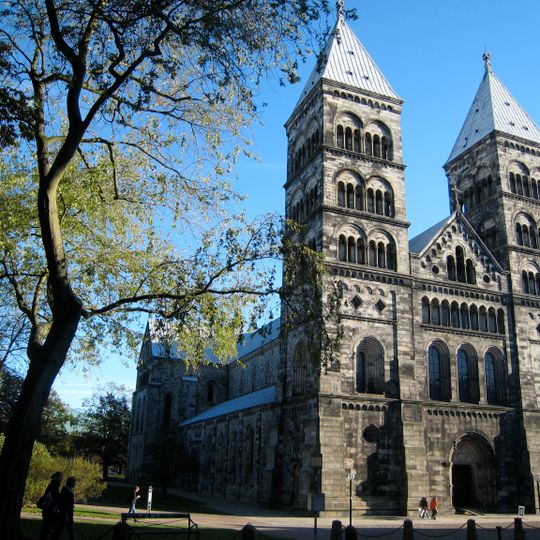
Lund Cathedral, Romanesque cathedral in Lund, Sweden
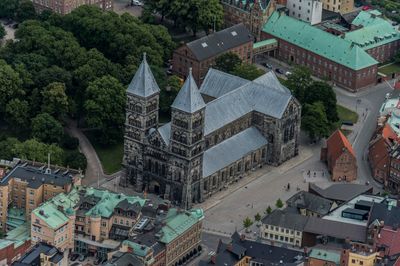
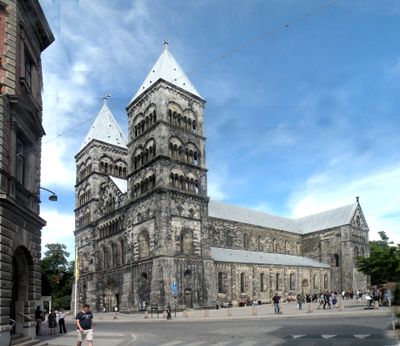
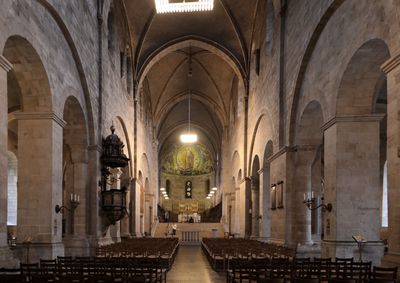
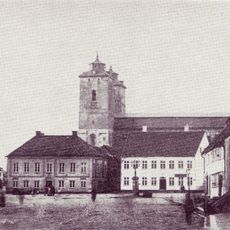
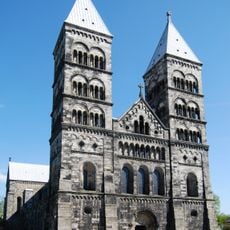
The cathedral is a Romanesque building made of sandstone with two towers rising 55 meters (180 feet) above the ground. Its interior holds a central nave, side aisles, and a semicircular apse closing the choir area.
Lund became an archbishopric for all the Nordic countries in 1103, and the present cathedral replaced an earlier church on the site. Its crypt altar was consecrated in 1123, and Archbishop Eskil dedicated the whole building to Saint Lawrence on 1 September 1145. A fire in 1234 destroyed the wooden ceiling and vaults, leaving only the crypt intact.
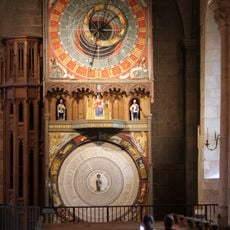
The cathedral is dedicated to Saint Lawrence, whose gridiron symbol appears in the medieval stone sculpture. The Gothic altarpiece was donated in 1398, and the choir stalls date from the 1370s. The astronomical clock, installed around 1424 and restored in 1923, is the focus of gatherings in the nave.
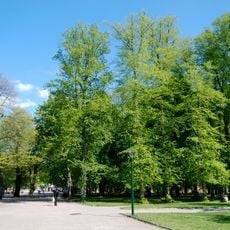
The cathedral stands in Lundagård park in central Lund, with the main entrance through the west portal between the two towers. The crypt, reached by stairs from the choir, has low vaults and columns; the astronomical clock in the nave draws crowds at its twice-daily display, so arrive early for a clear view.
The crypt below holds 41 cross vaults carried by columns. One column shows a carved figure of the giant Finn, who local stories connect to the building of the church.
The community of curious travelers
AroundUs brings together thousands of curated places, local tips, and hidden gems, enriched daily by 94,703 contributors worldwide.