Haväng dolmen, Neolithic dolmen in Haväng, Sweden
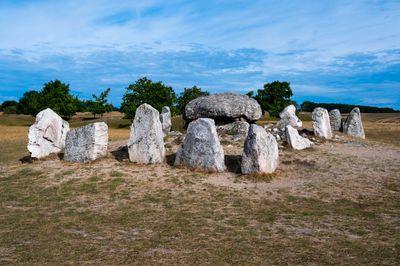
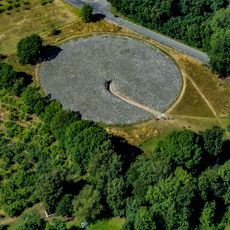
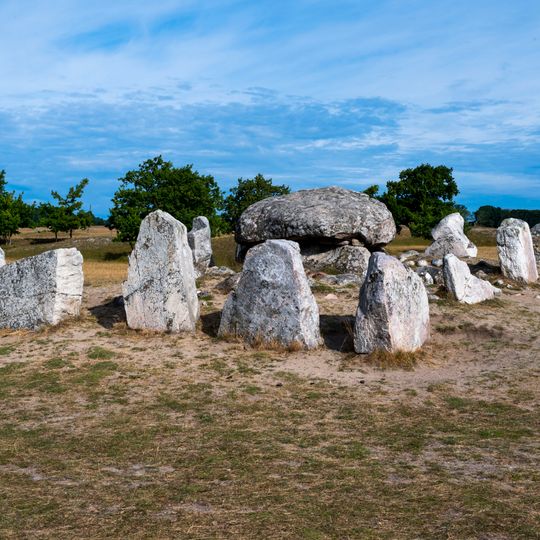
Haväng dolmen is a Neolithic burial chamber made of three side stones 1.65 m long and 0.5 m wide, roofed by a 2.7 × 2 m slab. The chamber opens toward the sea and the equinox sunrise. It is surrounded by a rectangular setting of 16 stones, 0.6 to 1.2 m high, enclosing about 60 m².
Built between 3500 and 2800 BC by the Funnelbeaker culture, this dolmen was exposed by a violent storm in the early 19th century. Excavations in 1869 found human skeletons and a flint axe. In 2015 an unknown person used the grave as a barbecue site, cracking the capstone.
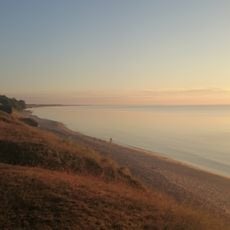
The chamber opening faces the sea and the point where the sun rises at the spring and autumn equinoxes. The site lies at Haväng on Österlen, in Ravlunda parish just north of the Verkaån outflow into Hanöbukten, at the southern edge of Ravlunda firing range. Dolmens of this kind usually held a single burial, generally of a person of standing in the community.
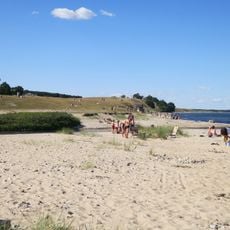
The dolmen sits near Haväng beach and can be reached by walking marked trails from the parking area. The site is open year-round and accessible to most visitors.
The chamber opening faces the sea, toward the point where the sun rises at the spring and autumn equinoxes. The 16 stones of the rectangular kerb enclose about 60 square metres, and dolmens with such four-sided kerbs are often called long dolmens. In summer 2015 someone used the grave as a barbecue site; the heat cracked the 2.7 × 2 m roof slab.
The community of curious travelers
AroundUs brings together thousands of curated places, local tips, and hidden gems, enriched daily by 93,379 contributors worldwide.