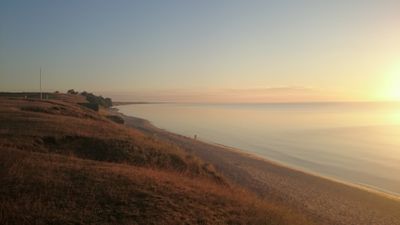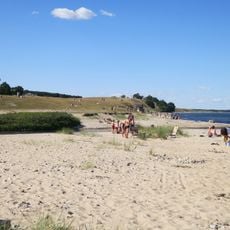
Haväng och Vitemölla strandbackar, Coastal nature reserve in Skåne, Sweden.
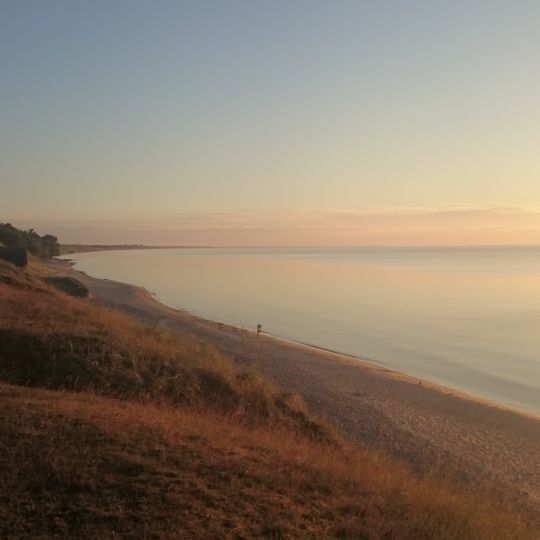
Haväng och Vitemölla strandbackar is a nature reserve stretching about 2.5 km along Hanö Bay, from the mouth of the Verkeån in the north to Vitemölla in the south. Most of it is open grazed heath, with pine woods north and south of the wooded Klammersbäck ravine. The sandy hills rising inland are remains from the last ice age's melting, around 13,000 years ago.
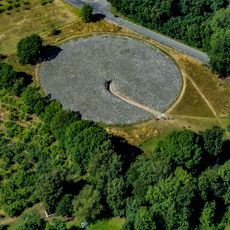
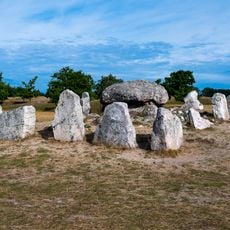
People have lived here since the first settlers arrived after the last ice age. The area holds several prehistoric graves and settlements; the best known is Havängsdösen, a burial chamber about 5,500 years old from the Neolithic, just north of the reserve. Northwest of the reserve stands Lindgrens länga, an open-air museum on the area's history, culture and nature.
The name combines 'haväng', a meadow by the sea, with 'strandbackar', the sandy shore slopes. The open heaths are grazed to keep the sand-steppe vegetation, and Lindgrens länga, an outdoor museum just northwest of the reserve, presents the area's history, culture and nature.
You can access the reserve via marked trails that connect different zones, with parking areas and information boards at main entry points. The terrain varies from flat beaches to steep slopes, so wear appropriate footwear for uneven ground.
The sandy slopes rising inland are remnants of the melting of the last ice age around 13,000 years ago, not cliffs. On Vitemölla strandbackar grows sand steppe, a vegetation type now very rare in Sweden and found only in southeastern Skåne, with species such as sand pink and sea holly.
The community of curious travelers
AroundUs brings together thousands of curated places, local tips, and hidden gems, enriched daily by 94,145 contributors worldwide.