Grogarnsberget, Nature reserve in eastern Gotland, Sweden.
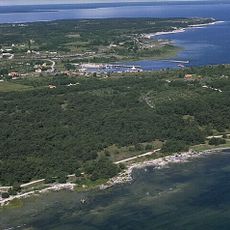
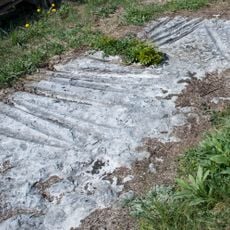
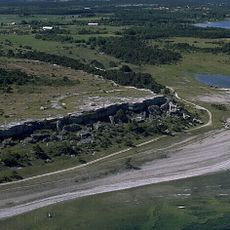
Grogarnsberget is a 30-metre-high limestone plateau hill on Gotland's northeast coast, with steep sea cliffs on three sides and the point Grogarnshuvud jutting north into the Baltic. Its alvar ground is thin-soiled heath where drought- and lime-loving plants grow, and the almost 3 km cliff edge is covered in huge rockfall masses in several places. A worn gravel and limestone track climbs the slope, with deciduous trees on the right and the sea behind the crest.
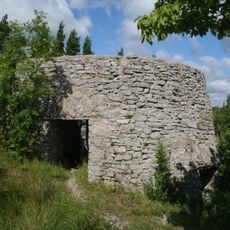
The hillfort on Grogarnshuvud, the northern tip of Grogarnsberget, was protected by 30 m sea cliffs on three sides and two 100 m stone walls with palisades to the south. Arrowheads from the late Vendel Period (550–800 AD) and wooden posts dated to 740 AD were found in the outer ramparts. Its interior measures 450 × 100 m, making it Gotland's second largest hillfort after Torsburgen.
The name Grogarnsberget comes from Grogarnshuvud, the headland where the fort stands. The fort's two 100 m stone walls with palisades closed off the southern approach, while 30 m sea cliffs guarded the other sides. Arrowheads from the late Vendel Period (550–800 AD) and wooden posts dated to 740 AD were found in the outer ramparts.
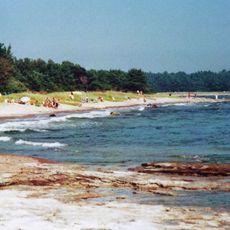
The reserve lies just east of Katthammarsvik, with the hillfort remains on the northern tip, Grogarnshuvud, where the 30 m cliffs drop to the sea. The nearly 3 km cliff edge is covered in places by large rockfall debris, so watch your footing. The reserve also takes in the shingle beaches along Skånerevet east of the hill.
The reserve is home to rare ant colonies on its open rock surfaces, which support habitat for uncommon butterfly species in this region. The limestone-rich environment allows specially adapted plants to thrive in these dry conditions.
The community of curious travelers
AroundUs brings together thousands of curated places, local tips, and hidden gems, enriched daily by 95,495 contributors worldwide.