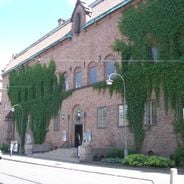
Gothenburg Natural History Museum, Natural history museum in Slottsskogen park, Gothenburg, Sweden
Gothenburg Natural History Museum occupies a hill in Slottsskogen park above Linnéplatsen, in a building by Ernst Torulf opened in 1923. Its older halls display taxidermy and animal models from around the world, including a 16.5-metre blue whale and an African elephant; a southern extension from 1981 holds temporary exhibitions, a café and a lecture hall.
Founded in 1833 and moved to its current building in 1923, the museum became Gothenburg's oldest institution of its kind. For nearly two centuries it has supported scientific research and education focused on species diversity.
The museum's name appears in the whale's nickname: the Malm whale honours August Malm, the curator who bought the 1865 stranded animal and had it preserved. He first took it for a new species and named it Balaenoptera carolinae after his wife Carolina. The whale's upper jaw can be lifted and its interior entered on special occasions.
The entrance is in the newer southern extension, which holds temporary exhibitions, a café and a lecture hall; the permanent displays are in the older 1923 building. The café kitchen is open to the public and popular with park visitors. Outside, the Spacewalk model of the solar system begins at the museum wall and runs south down the hill.
The blue whale, a young male 16.5 m long, stranded in Askim Bay on 29 October 1865 and was bought and preserved by curator August Malm, who first took it for a new species and named it Balaenoptera carolinae after his wife Carolina. Its upper jaw lifts open and the interior, once furnished with tables for events, can be entered on special occasions. The mounted elephant, a bull shot in Huila, Angola, on 4 December 1948, was completed by conservator David Sjölander and unveiled on 29 March 1952.
The community of curious travelers
AroundUs brings together thousands of curated places, local tips, and hidden gems, enriched daily by 93,370 contributors worldwide.