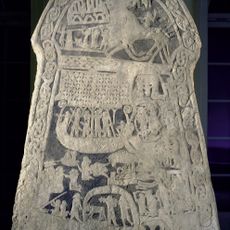
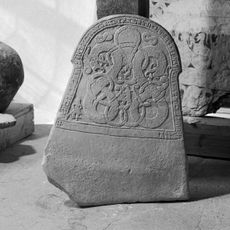
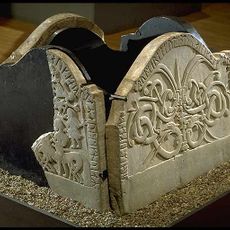
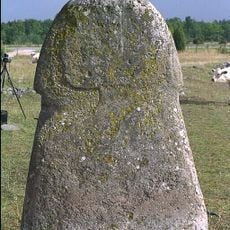
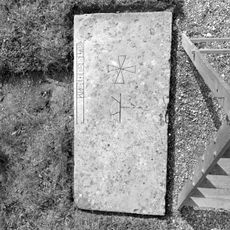
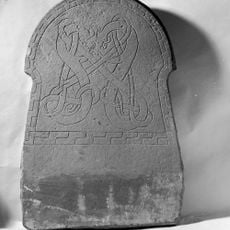
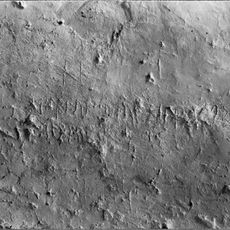
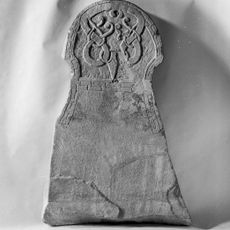
Tjängvide image stone, Picture stone at Swedish History Museum, Sweden
The Tjängvide stone is a limestone artifact from the Viking Age carved with detailed mythological scenes and stands about 1.7 meters tall. Its surface displays two main sections separated by braided patterns, each containing depictions from Norse religious beliefs.
The stone was discovered in 1844 on a farm on Gotland and dates to the Viking Age between 700 and 900 CE. It stands as evidence of the artistic skill and religious beliefs that flourished during this period.
The stone depicts scenes from Norse mythology that held deep religious meaning for people of that time. These carvings tell of gods and beliefs about an afterlife that shaped how society understood the world and death.
The object is housed in the Swedish History Museum in Stockholm where visitors can examine it in a controlled environment. It is displayed alongside other Viking Age artifacts that help provide historical context for understanding the period.
The rider on the eight-legged horse is offered a drinking horn by a woman, usually read as a valkyrie welcoming Odin or a dead warrior; the horse itself holds nothing. The longship below has tall aft and stern and a sail almost as wide as the ship is long, with no crew carved. The rider image serves as the logo of the Swedish History Museum.
The community of curious travelers
AroundUs brings together thousands of curated places, local tips, and hidden gems, enriched daily by 93,936 contributors worldwide.