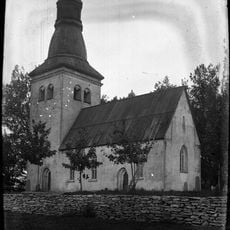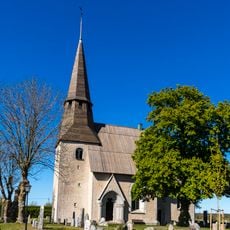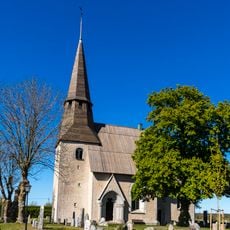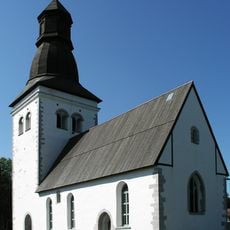
Ardre image stones, Picture stones at Ardre Church, Sweden
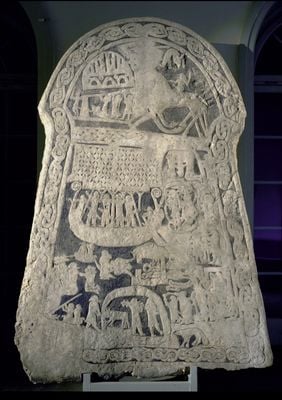
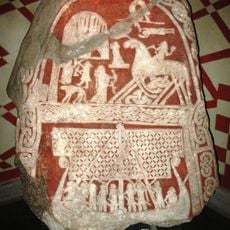
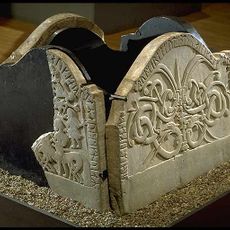
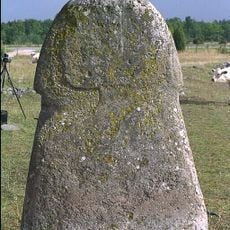
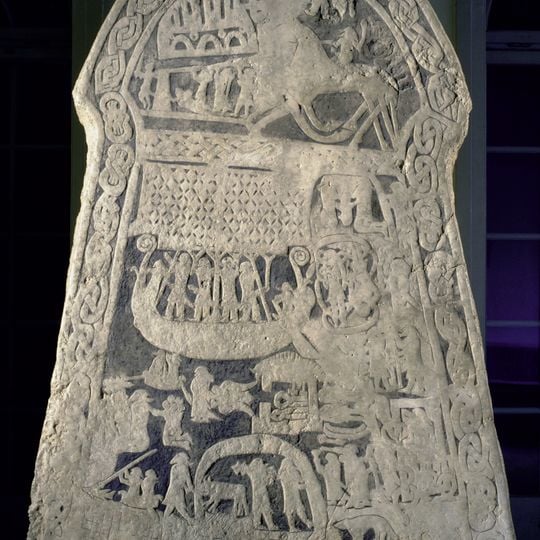
The Ardre image stones are ten carved stones, dated to the 8th–11th centuries, that were found under the floor of Ardre Church on Gotland and are now in the Swedish Museum of National Antiquities in Stockholm. The largest, Ardre VIII, is a tapering slab of pale grey stone with a raised knotwork border and horizontal bands of relief: a diamond lattice, a boat-shaped panel with small standing figures and spirals at each end, and below that figures, an arch and overlapping animals.
The ten stones date from the 8th to 11th centuries and were found in 1900–1902 during restoration work at Ardre Church, where they had been reused as paving beneath the wooden floor. Before their value was understood, such stones were often built into roads, bridges and buildings. They are now held by the Swedish Museum of National Antiquities in Stockholm.
The carvings name no gods in writing; the figures are identified through scenes known from Old Norse texts. On Ardre VIII, a smith in bird form flies from a forge where the king's sons lie beheaded, the Weyland story, while a rider on Sleipnir is taken for Odin. A woman holding two swords fits no surviving myth.
The original stones are now on display at the Swedish Museum of National Antiquities in Stockholm, where you can examine them up close. The museum visit allows detailed viewing of the fine carvings and runic inscriptions carved into each stone's surface.
The Ardre III stone displays twin serpent figures signed with runes by the artist Likraiv, making it identifiable as his work. This signature is rare among picture stones and gives us a name of someone who created these works over a thousand years ago.
The community of curious travelers
AroundUs brings together thousands of curated places, local tips, and hidden gems, enriched daily by 93,391 contributors worldwide.