Skanörs borg, Medieval castle ruins in Skanör, Sweden
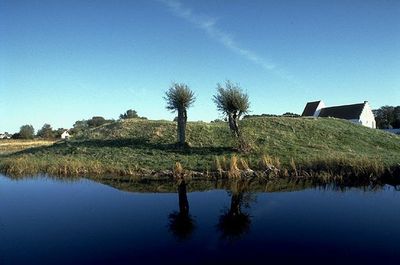
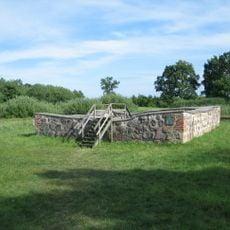
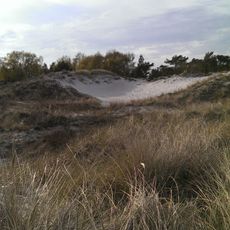
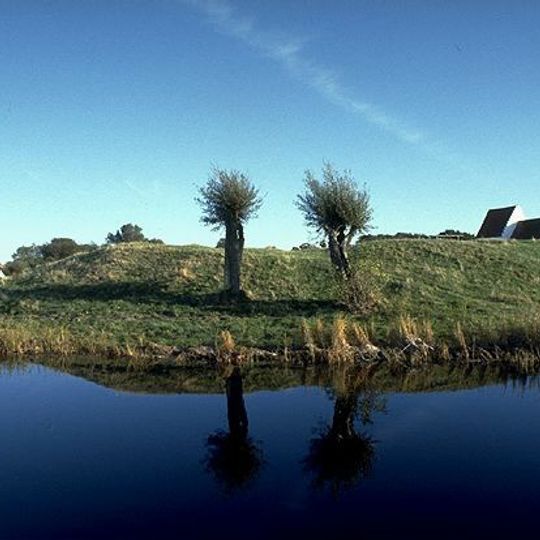
Skanörs borg is a ruined castle north of Skanörs kyrka, now a round-oval mound with low wall remnants and the inner of two ring-shaped moats. Excavations in 1907–1909 revealed a brick house about 17 by 8 metres and a smaller half-timbered building on the mound, plus a deep timber-lined well and a wooden palisade at the moat's foot.
Built around 1230 on a round-oval mound, Skanörs borg let the Danish king's bailiff control the Skånemarked herring market and collect fees, issuing stamped lead seals as receipts. German forces took the castle in 1312, and the nearby Falsterbohus took over royal administration by 1425. Coin finds end in the 1420s, after which the site was abandoned.
The castle was the seat of the Danish king's bailiff, who collected taxes and fees from the herring market. Traders came here to buy their fishing licence and received a small stamped lead seal as proof of payment. The market ran from the 13th to the early 16th century.
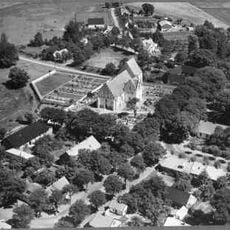
The ruins sit next to Saint Olof Church on the northern edge of Skanör and are easily accessible on foot. Wear sturdy shoes since the ground is uneven and can become slippery in wet conditions.
The castle was taken by German forces in 1312, not destroyed; Falsterbohus in nearby Falsterbo then took over much of its role. The youngest coins found on the mound date from Erik of Pomerania's reign in the 1420s, after which the site was abandoned. Excavations in 1907–1909 and again in the 1980s revealed a brick house of 17 by 8 metres, a smaller half-timbered building and a deep, wood-lined well on the cobbled mound.
The community of curious travelers
AroundUs brings together thousands of curated places, local tips, and hidden gems, enriched daily by 94,521 contributors worldwide.