Skårby runestone, runestone in Lund, Sweden
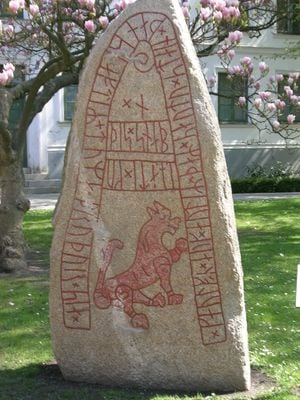
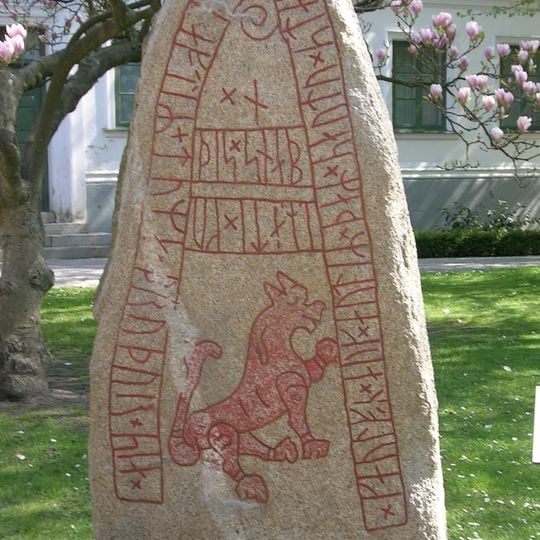
The Skårby 1 runestone is a 2.6-metre granite slab, wider at the base and tapering upward, with carved lines and figures painted red. Two vertical bands of runes run down the left and right edges, framing a rectangular panel of smaller runes with a cross-like mark above. Below is a four-legged beast with a curled tail and open jaw facing right. It stands at the Kulturen open-air museum in Lund.
The stone was raised in the Viking period to commemorate a man named Tumme who owned a place called Guðissnapi. Two brothers, Káulfr and Autir, erected the stone to honor their deceased brother, reflecting the custom of using stones to mark family members.
The inscription names the brothers Káulfr and Autir, who raised the stone for Tumi, their brother, who owned Guðissnapi, today the village of Gusnava. The carved beast, identified as a lion, is painted red, as are the runes. The stone now stands at the Kulturen open-air museum in Lund, no longer at Skårby church.
The stone stands in the open-air museum Kulturen in Lund, not at its original site by Skårby church. Look for the red-painted carvings: two vertical bands of runes, a panel of smaller runes, and a four-legged beast below. The surface is rough granite, so the painted lines stand out best in daylight.
The runes are carved in an old style called RAK, representing the earliest form of runic writing. This style features straight ends without serpent or animal shapes at the script terminals, showing the careful craftsmanship of the period.
The community of curious travelers
AroundUs brings together thousands of curated places, local tips, and hidden gems, enriched daily by 94,021 contributors worldwide.