Banérska palatset, Renaissance palace in Norrmalm district, Stockholm, Sweden
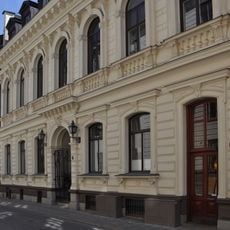
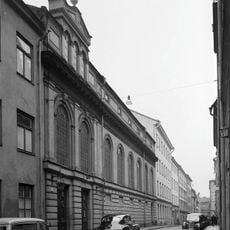
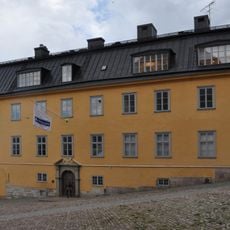
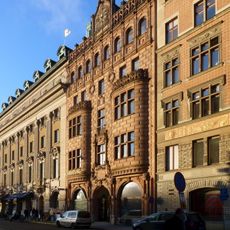
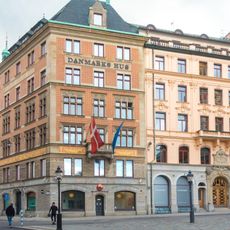
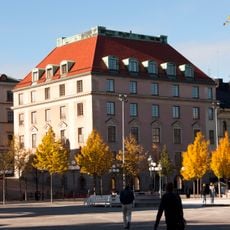
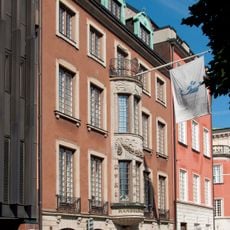
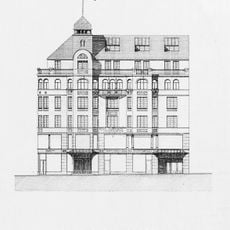
Banérska palatset is a four-story stone structure with ornamental facade details located at Västra Trädgårdsgatan 11A in central Stockholm near Kungsträdgården. Today it houses 21 Odd Fellow institutions, serving over 2,700 members through its ceremonial halls and meeting rooms.
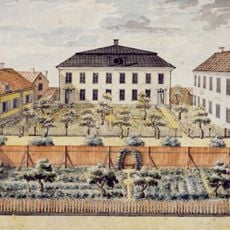
The palace was originally built in the 1620s by Svante Gustafsson Banér, son of court marshal Gustav Banér, who was executed in Linköping in 1600. In the mid-17th century his son Svante Svantesson Banér commissioned major extensions; the northern house was rebuilt around 1670 to designs by architect Mathias Spihler. After passing through the noble families Piper, Bielke and Brahe, it was bought in 1899 by tobacco manufacturer Johan Bäckström and inherited in 1902 by his son Walter.
The Independent Odd Fellow Order established itself here in 1922 and uses the building as headquarters for its Stockholm lodges. The four facade relief sculptures visible today represent core principles that guide the organization's charitable work.
The palace stands at Västra Trädgårdsgatan 11A, beside Kungsträdgården on Norrmalm, so it is reached on foot from the surrounding streets. The four facade reliefs with the Odd Fellow commandments face the street and can be read from outside. The ceremonial and banquet halls belong to the order and are not open as a public museum.
The four relief sculptures on the facade represent core commandments of the Odd Fellow movement: visiting the sick, assisting those in need, burying the deceased, and educating orphans. These carvings are unusual because they turn the organization's ethical teachings into public art rather than keeping them hidden behind closed doors.
The community of curious travelers
AroundUs brings together thousands of curated places, local tips, and hidden gems, enriched daily by 93,457 contributors worldwide.