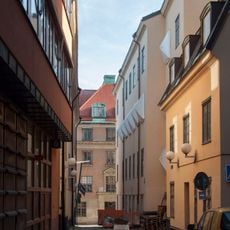
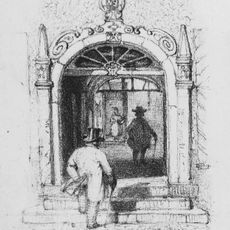
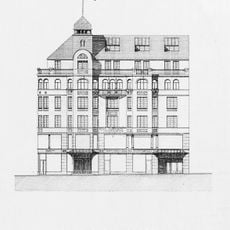
Lantmäteristyrelsens hus, Residential building in Stockholm, Sweden.
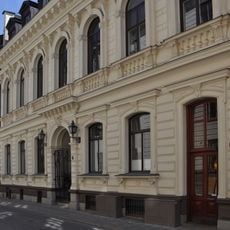
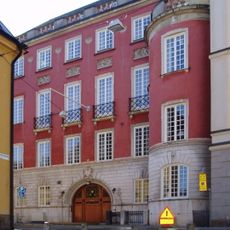
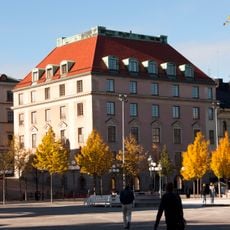
Lantmäteristyrelsens hus is a two-storey building at the corner of Västra Trädgårdsgatan by Kungsträdgården in Stockholm, erected in 1642 by master builder Louis Gilles as a pleasure pavilion for Queen Kristina. Its sandstone portal survives from the year of construction, while the present broken hipped roof dates from Carl Hårleman's rebuilding in the 1740s. The building is an individual listed monument since 1995.
Louis Gilles built the pavilion in 1642 as a pleasure house for Queen Kristina, part of a plan to raise the status of Norrmalm. After her abdication in 1654 it risked decay, but in 1689 the Lantmäterikontoret moved in and stayed until 1975. Carl Hårleman gave it its present broken hipped roof in the 1740s; the sandstone portal is original.
The name Drottning Kristinas lusthus recalls Queen Christina, for whom Louis Gilles built the pavilion in 1642 as a pleasure house. After her abdication in 1654 it risked decay, and from 1689 to 1975 the Lantmäterikontoret, the land-survey office, occupied it. The sandstone portal is original from the construction year.
The building stands at the corner of Västra Trädgårdsgatan, facing Kungsträdgården in the Lantmäteribacken area of Norrmalm. It is a state-listed building monument (enskilt byggnadsminne) since 1995, so view the sandstone portal and the 1740s roof from the street. The former land-survey office is not open as a residence.
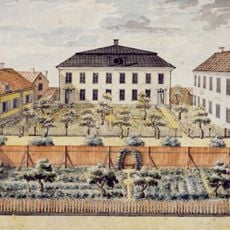
The building's roof, with its raised central section, appears in Erik Dahlbergh's Suecia antiqua et hodierna and is considered a forerunner of the säteritak, a Swedish roof form. The sandstone portal, however, dates from the year of construction in 1642 and survived Carl Hårleman's 1740s rebuilding.
The community of curious travelers
AroundUs brings together thousands of curated places, local tips, and hidden gems, enriched daily by 93,729 contributors worldwide.