Fleminggatan, Street in Kungsholmen, Stockholm, Sweden
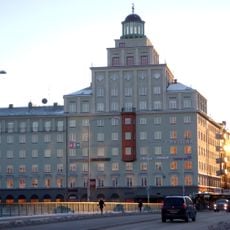
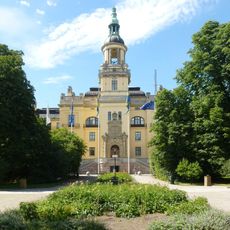
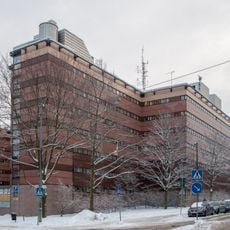
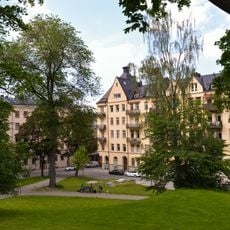
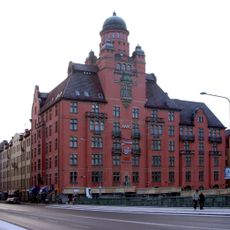
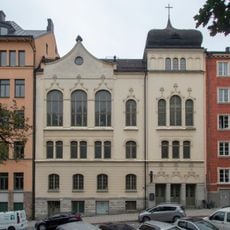
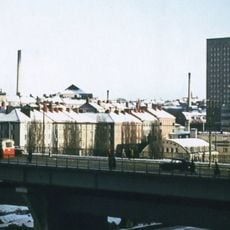
Fleminggatan is a street on Kungsholmen in central Stockholm that runs from east to west, connecting several neighborhoods. Along the way, you find residential buildings with shops and cafes on the ground floors, mixed with important public buildings such as government offices and a courthouse.
The street's oldest known name was Glasbruksgatan, after Melker Jung's glassworks built south of the street by Klara sjö in 1641; the works burned in 1653. Later names were Tegelbruksgatan (brickworks) and Reparebansgatan (ropewalk). In 1885 it was renamed Fleminggatan after Clas Larsson Fleming (1592–1644), the governor who carried out Stockholm's grid-plan reform in the 1640s.
The name Fleminggatan, adopted in 1885, honours Clas Larsson Fleming (1592–1644), the governor who carried out Stockholm's grid-plan reform in the 1640s. Earlier names came from workshops on the street: Glasbruksgatan after Melker Jung's glassworks of 1641, later Tegelbruksgatan and Reparebansgatan. Near the former workers' district around Kungsgatan 84 stands the Left Party's head office.
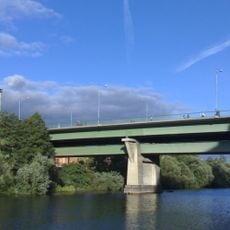
Fleminggatan runs from Kungsbroplan in the east to Mariebergsgatan in the west. Entrances to Fridhemsplans tunnelbana station are at its crossing with Sankt Eriksgatan, where Västermalmsgallerian also stands. The street is a main artery, so expect traffic; pedestrians and cyclists use the sidewalks and adjacent paths.
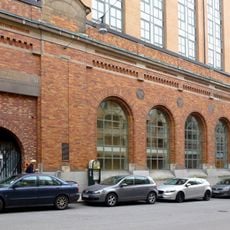
The street was home to different crafts and industries that shaped its names, such as a glassworks and rope-making business, now visible only in historical names. This industrial past appears today in the mix of older buildings that were later converted for other purposes.
The community of curious travelers
AroundUs brings together thousands of curated places, local tips, and hidden gems, enriched daily by 94,561 contributors worldwide.