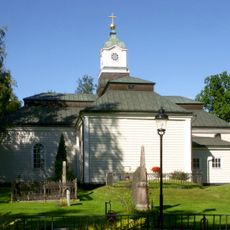
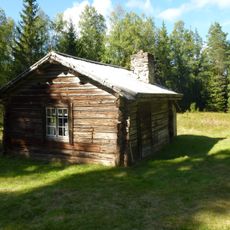
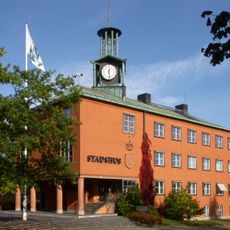
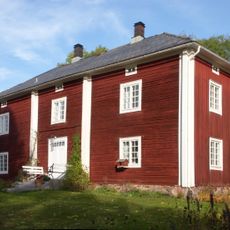
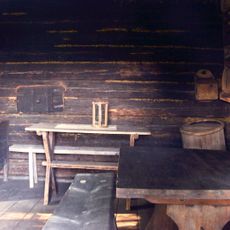
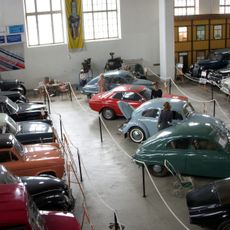
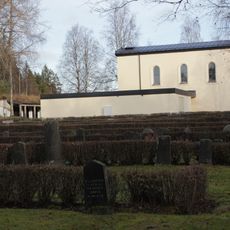
Grängesberg mines, Mining museum and industrial heritage site in Grängesberg, Sweden.
This mining site features underground passages, historic industrial buildings, and exhibition spaces with equipment and tools used in extracting ore from the earth. The complex is laid out across several areas that show how mining operations worked and what technology was used at different times.
Iron ore was mined at Grängesberg from the 16th century until the mine closed in 1989, making it Sweden's third-largest iron ore mine. In 1893 a power plant at Hällsjön, 15 km away, began supplying alternating current to the mines, the world's first commercial long-distance AC transmission. By the early 1970s up to four million tonnes were extracted annually before production declined.
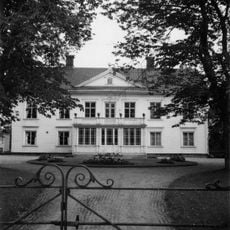
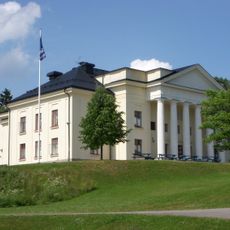
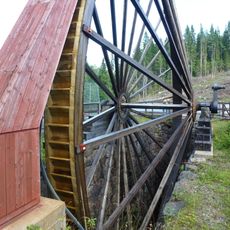
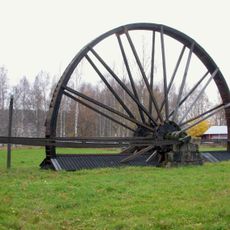
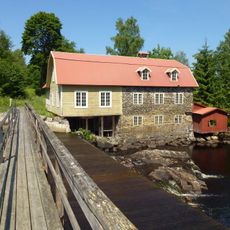
The old mine buildings now house the Filmarkivet i Grängesberg film archive, the Mojsen Gruvcentrum mining centre and art exhibitions in the former machine house. The site is part of Ekomuseum Bergslagen, and the reconstructed Lombergshjulet water wheel recalls the wheels that once powered the pumps.
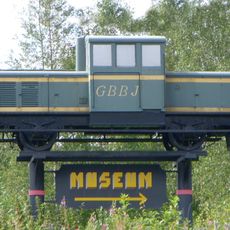
The mine area lies in Grängesberg, 16 km south-southwest of Ludvika, and is part of the Ecomuseum Bergslagen. Several old mine buildings now hold the Filmarkivet i Grängesberg, the Mojsen Gruvcentrum and art exhibitions in the former machine house, so the indoor stops can be combined with a walk through the mining landscape. The last ore train left for Oxelösund in January 1990.
The ore deposit here was rich and unusually consistent in its composition, which made it especially valuable for large-scale production. This quality helped keep the mine profitable and operating for over a century.
The community of curious travelers
AroundUs brings together thousands of curated places, local tips, and hidden gems, enriched daily by 94,113 contributors worldwide.