Hemmet, Neoclassical building in Drottningholm, Sweden
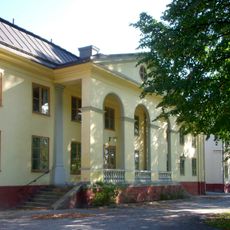
Hemmet is a building on Drottningholm Palace grounds on Lovön, north of Ekerövägen. It has four two-story Doric columns and a wide sandstone staircase on the entrance side. The building was probably designed in the 1780s by Olof Tempelman and was painted white with a faint yellow tint in 1971.
A previous building on the site was demolished in 1782, and Gustav III had the present structure built, probably designed by Olof Tempelman after the king's 1784 trip to Italy. The original tenants were the Kungsgården inspector and the Lovö parish priest. In 1816 it was converted into the residence of the governor (ståthållare), and to distinguish it from the governor's office it was called Hemmet.
The building reflects the architectural traditions of late 18th-century royal estates in Sweden. Walking around it today, you can see how it fits into the formal landscape design that once served the Swedish monarchy.
Hemmet stands on a hill just north of Ekerövägen, on the Drottningholm palace grounds on Lovön. It is a state building monument owned and managed by Statens fastighetsverk, and since 1991 it has been part of the UNESCO World Heritage site with Drottningholm Palace. The building is not open as a museum; visitors see the exterior and its position in the former English park from the surrounding paths.
Originally, the building housed two separate households under one roof: the steward of Kungsgården occupied the ground floor while the Lovö parish priest lived above. This practical arrangement reveals how administrative and spiritual roles coexisted on the royal estate.
The community of curious travelers
AroundUs brings together thousands of curated places, local tips, and hidden gems, enriched daily by 94,334 contributors worldwide.