Paulis malmgård, Manor house in Södermalm, Stockholm, Sweden
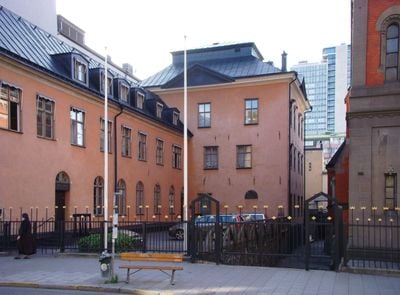
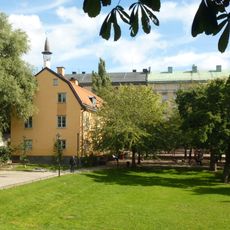
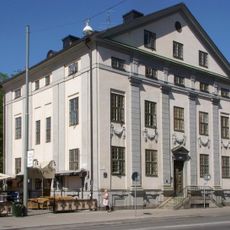
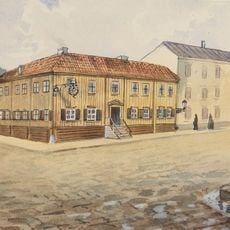
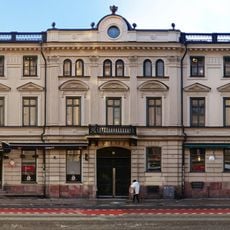
Paulis malmgård is a three-story stone structure at the intersection of Folkungagatan and Götgatan, built with a saddle roof and cubic form from the late 1600s. The windows feature formal frames that reflect the refined architectural style of the period, with proportions and detailing typical of Swedish building traditions.
The first building on the site was begun in 1654 for postmaster Johan von Beijer, when the plot lay on the shore of Fatburen lake. Niclas Pauli, an immigrant from Schleswig who ran a dye works and wool weaving business, bought it in 1678 and had the surviving buildings erected in the 1680s. His son Christopher and later heirs continued the business; Niclas Pauli junior, who bought the estate in 1776, embellished it inside and out before selling it in 1796 and going bankrupt in 1799. The Catholic congregation acquired the manor in 1857.
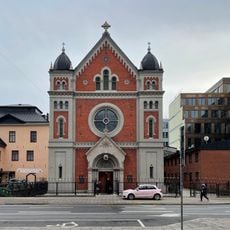
The name comes from Niclas Pauli, a dyer and wool weaver from Schleswig who bought the estate in 1678 and had the surviving buildings erected in the 1680s. Since 1857 the property has belonged to Stockholm's Catholic parish, and the main building now holds the parish hall and offices beside the Catholic Cathedral.
The main building is reached through a rear courtyard next to Stockholm's Catholic Cathedral, and its facade is hidden from Götgatan by later buildings. The 17th-century east gate is preserved, but the premises now house the parish hall and offices, so interior access depends on parish activities.
Restoration work in the main hall uncovered original window frames that suggest architect Jean de la Vallée may have contributed to the building's design. This discovery connects the property to one of early Sweden's most influential designers.
The community of curious travelers
AroundUs brings together thousands of curated places, local tips, and hidden gems, enriched daily by 94,498 contributors worldwide.