Rödsten, Stone monument in Grebo, Åtvidaberg Municipality, Sweden
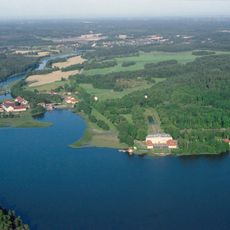
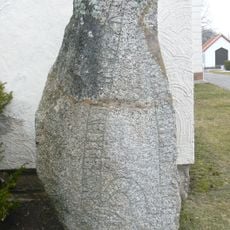
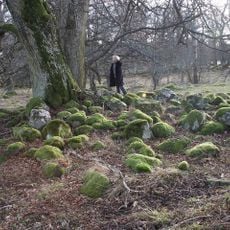
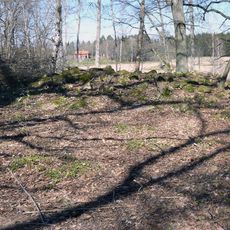
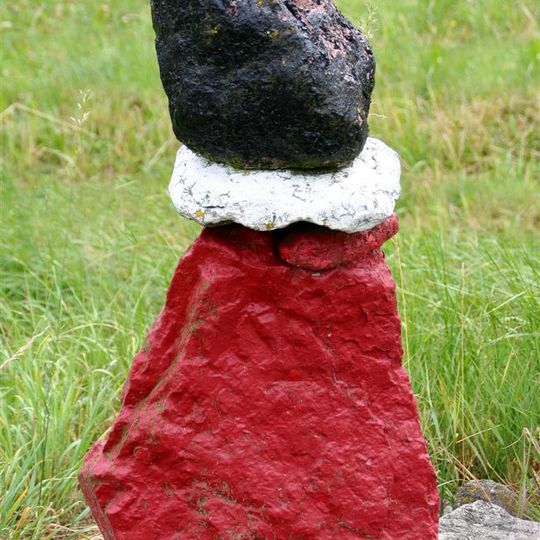
Rödsten is a phallus-shaped stone arrangement on a field west of route 35, 10 km northwest of Åtvidaberg and just south of Grebo. It consists of a base topped by a red-painted stone, a smaller white-painted stone, and a black-painted stone at the top, surrounded by a cairn, possibly a burial mound.
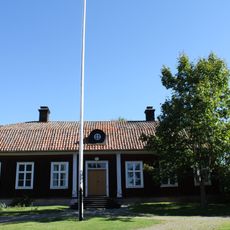
Rödsten is first documented in 1360, when a man named Arvid in Rödsten served as churchwarden. In the late 17th century the farm at Rödsten was a captain's residence. The stone arrangement itself has no counterpart left in Sweden and is thought to be the last remnant of a pre-Christian fertility cult honouring the god Freyr.
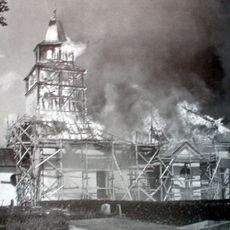
The name Rödsten also appears as Rösten, Rögubben or Rödstensgubben. A local legend holds that the stones must be repainted whenever the barn is repainted, or the barn will burn down; this was said to have happened in 1920 and was blamed on Rödstensgubben.
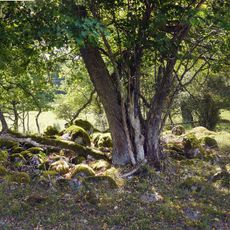
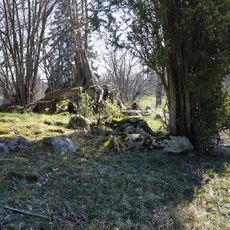
The stones stand on farmland west of Route 35, about 10 km northwest of Åtvidaberg and just south of Grebo. The site lies on private property, so it is viewed from the road or with the landowner's permission. The surrounding cairn, possibly a burial mound, is part of the same registered ancient monument.
The stones were stolen in September 2006 but found a few days later in Västervik. A legend holds that they must be repainted whenever the barn is repainted, or the barn will burn down; this happened in 1920 and was blamed on Rödstensgubben.
The community of curious travelers
AroundUs brings together thousands of curated places, local tips, and hidden gems, enriched daily by 94,557 contributors worldwide.