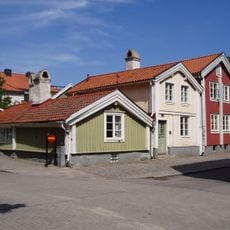
Skälby yard, Manor house in Kalmar Municipality, Sweden.
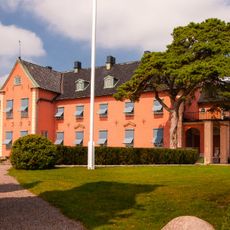
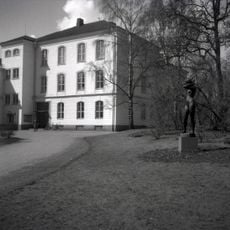
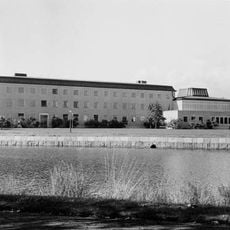
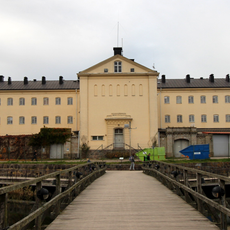
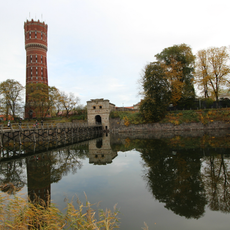
Skälby yard is a former royal manor in Kalmar Municipality whose main building dates from 1785. Around it stand the farm buildings, two ponds, and the remains of formal gardens, including a long elm avenue that once linked Kalmar's northern and southern approaches.
Skälby is first documented in records from 1202–1215, when it was a village of four farms; one belonged to the Kalmar nun convent. Gustav Vasa confiscated the farms and merged them into a royal "ladugårdsgods" under Kalmar Castle, managed by a bailiff. In 1534 he granted the estate to his governor Jakob Smålänning, and during the 1542 peasant uprising Nils Dacke had his headquarters at Skälby, probably in Brukshagen.
The property serves as a working learning farm where children and teenagers gain hands-on experience with livestock and develop practical outdoor skills. This educational use shapes how the site functions today and creates a living space for young learners.
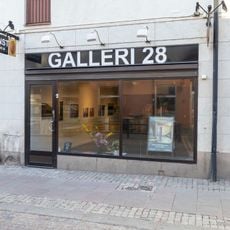
The manor building from 1785 now hosts art exhibitions, association activities and courses, and 4H runs programmes on the farm. The grounds are a well-visited recreation area, with concerts and evening gatherings in the garden in summer. A garden for all the senses, Skälbyträdgården, has been developed here since 2015.
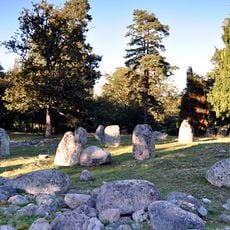
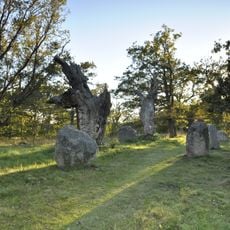
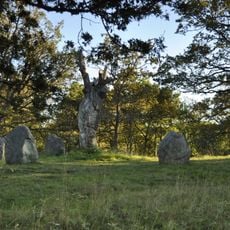
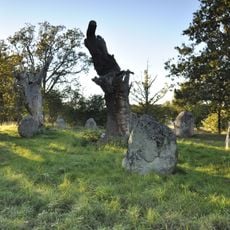
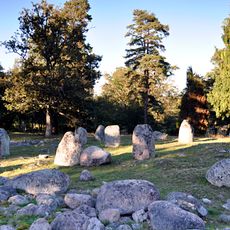
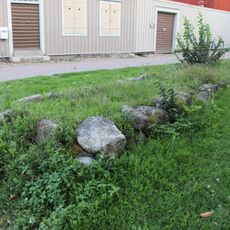
In 1824, remains of a Viking ship were found at Skälby, and Gustav Vasa's war fleet is said to have been hauled through the nearby Trångsund passage. Two stone circles stand in the elevated deciduous woods of Brukshagen, where Nils Dacke had his headquarters during the 1542 peasant uprising.
The community of curious travelers
AroundUs brings together thousands of curated places, local tips, and hidden gems, enriched daily by 93,665 contributors worldwide.