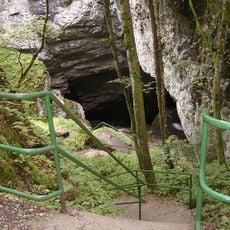
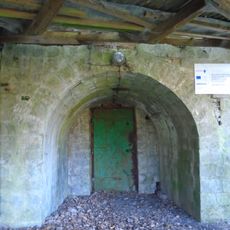
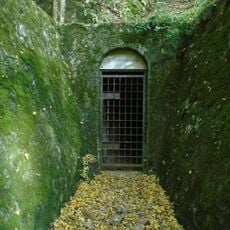
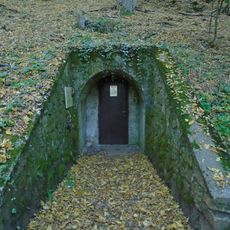
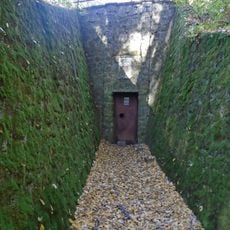
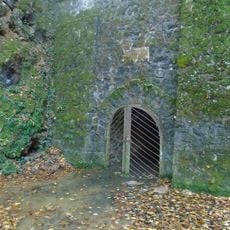
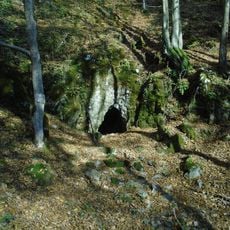
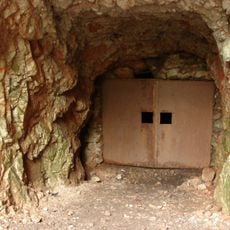
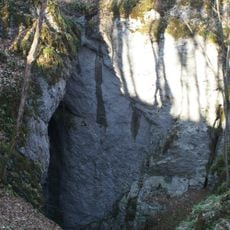
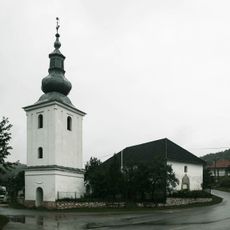
Domica Cave, Cave entrance in Slovak Karst National Park, Slovakia
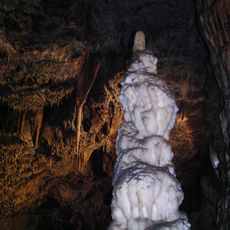
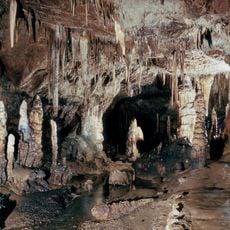
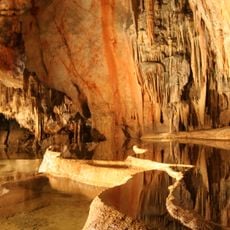
Domica Cave is a 5,358 m river cave in Middle Triassic white Wetterstein limestone, developed on three levels 8–12 m apart. Its dry upper passages include the Palm Grove and the Dome of Indian Pagodas, while the lower level carries the Styx stream, whose 140 m stretch is navigated by boat. The cave is known for shield-shaped stalagmites, onion-like stalactites and terraced rimstone pools.
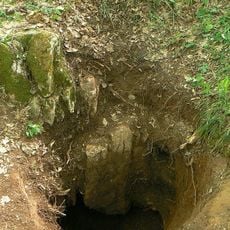
Ján Majko discovered the cave on 3 October 1926 after descending a 15 m abyss. Jaroslav Böhm directed excavations in the 1930s, uncovering fireplaces, post holes and about 45,000 pottery sherds of the Bükk culture, along with bone tools and the oldest comb in Europe.
The cave is named after the Domický potok stream and the hill above its entrance. Neolithic Bükk culture farmers used it around 5,000 years ago, firing pottery inside; over 200 vessels were reconstructed from sherds, and charcoal ornaments survive in the Posvätná chodba. A sinter-coated Bükk vessel appears in the cave's logo.
The tour route open since 1932 runs 1,315 m through the cave, and a 140 m boat ride on the underground Styx river is part of the visit. Cave temperature stays between 10.2 and 11.4 °C with humidity of 95 to 98%, so bring warm, water-resistant clothing and non-slip footwear. The entrance lies at 339 m above sea level beside the sink of the Domický potok below the hill of the same name.
The cave continues beyond the border and connects to a larger underground network that stretches across two countries. This cross-border system makes it a rare example of how geology ignores political boundaries.
The community of curious travelers
AroundUs brings together thousands of curated places, local tips, and hidden gems, enriched daily by 94,714 contributors worldwide.