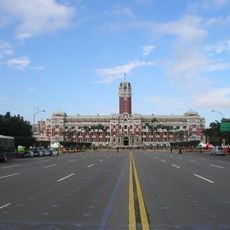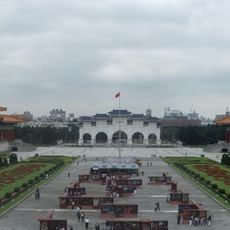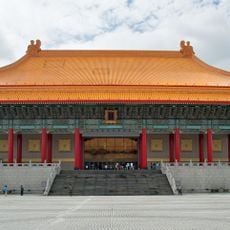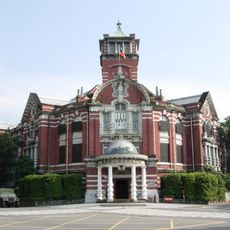
National Concert Hall, Concert hall in Zhongzheng District, Taipei, Taiwan
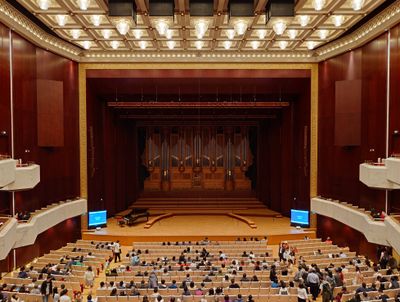
The National Concert Hall is a concert venue in Zhongzheng District, Taipei, Taiwan, that seats more than two thousand people and brings together several performance spaces under one roof. Beyond the auditoriums, the building also houses art galleries, libraries, shops and dining areas, turning a visit into a broader cultural experience.
The hall was completed in 1987 after the death of Chiang Kai-shek, when the government approved construction as part of a cultural memorial project. The complex arose as part of a broader plan to promote performing arts in Taiwan.
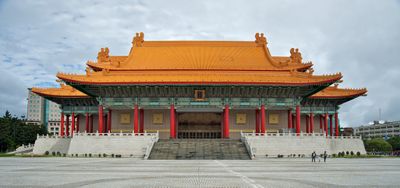
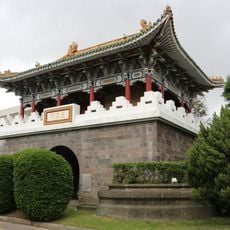
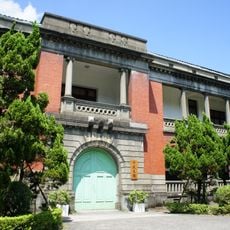
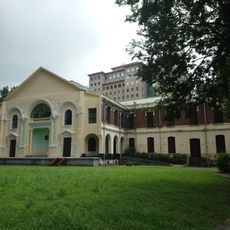
The building's facade follows classical Chinese architecture with a curved tiled roof and golden ornaments that stand apart from Western-style modern theaters. Inside, traditional motifs combine with contemporary acoustic design, allowing visitors to experience both local and international performances in a culturally rooted setting.
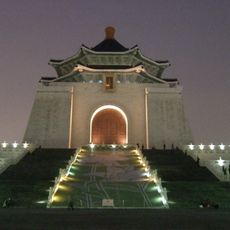
The building sits at Liberty Square and connects directly to Taipei's metro network, with several lines stopping nearby. The entrances are at ground level, allowing wheelchair users to enter without major obstacles.
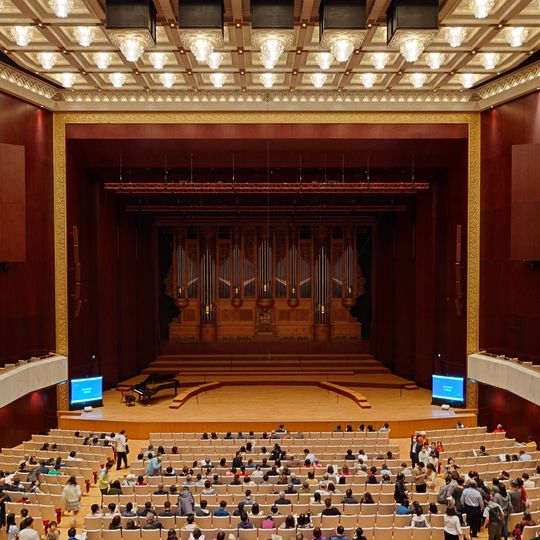
The pipe organ, which at the time of its installation in 1987 was the largest instrument of its kind in Asia, was designed specifically for the hall's acoustics. The instrument consists of several thousand pipes built into the rear stage wall, filling concerts with a full, spatial sound.
The community of curious travelers
AroundUs brings together thousands of curated places, local tips, and hidden gems, enriched daily by 91,688 contributors worldwide.