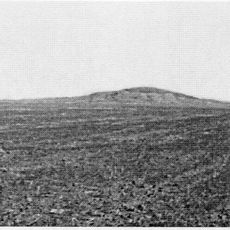
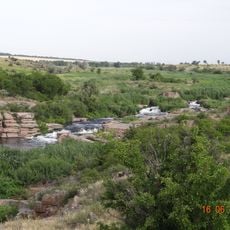
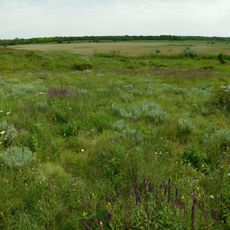
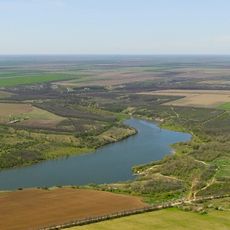
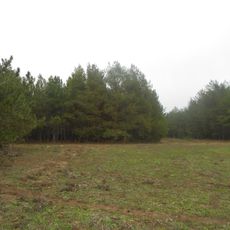
Solokha, Scythian burial mound in Velyka Znamianka, Ukraine.
Solokha is a Scythian kurgan on the left bank of the Dnieper, 18 km from Kamianka-Dniprovska opposite Nikopol. The mound stands 19 m high with a diameter of about 100 m and dates to the early 4th century BC. It contains two royal tombs: a central one robbed in antiquity and an intact lateral one excavated by Nikolay Veselovsky in 1912–13.
The mound was raised in the early 4th century BC and excavated in 1912–1913 by Nikolay Veselovsky. The central tomb had been robbed in antiquity but still held a female ruler and two horses in rich attire. The side tomb was intact, containing a male ruler covered in gold with his weapon bearer, a servant and five horses. The site appears to confirm Herodotus's account of the royal Scythians' burial land of Gerrhos.
This mound served as a burial place for a Scythian ruler accompanied by his attendant and horses, reflecting the importance of hierarchy and ritual in death. The crafted objects discovered here, especially a gold comb decorated with warriors in combat, reveal the skilled metalwork valued by this people.
The mound stands on the left bank of the Dnieper, 18 km from Kamianka-Dniprovska opposite Nikopol, in open farmland; the surrounding ground is ploughed, so the earthwork is best picked out from a distance or with local guidance. The finds, including the gold comb, are held by the Hermitage Museum in Saint Petersburg.
The golden comb was found near the head of the buried ruler, beside a bronze helmet. Its three-fighter scene is worked in gold, and the piece was recovered by A. A. Bobrinsky during the Veselovsky campaign. It is now in the Hermitage in Saint Petersburg.
The community of curious travelers
AroundUs brings together thousands of curated places, local tips, and hidden gems, enriched daily by 93,482 contributors worldwide.