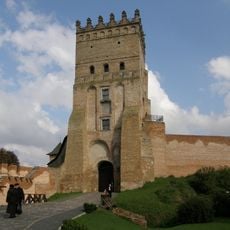
Bridgettine monastery, Baroque monastery in Lutsk, Ukraine.
The Bridgettine monastery stands at Kafedralna Street 16 in Lutsk, on the site of a palace of starosta Albrecht Stanisław Radziwiłł, which he gave to the nuns in 1624. The Baroque Church of Saint Bridget was finished in 1642, and the palace was converted into cells with windows facing the Styr River. A chapel with an image of Saint Peter in chains was set up in one of the Okolny Castle towers adjoining the palace.
Isabella Semashko, wife of a Volhynian standard-bearer, invited the Bridgettines to Lutsk in the early 17th century. In 1624 Albrecht Stanisław Radziwiłł gave them his palace in the Okolny Castle; the Baroque Church of St Bridget was finished in 1642. After a fire in 1845 the complex was confiscated and in 1890 converted into a prison, which operated until the mass killings of June 1941.
The monastery's name comes from the Bridgettine order, invited to Lutsk by Izabella Semashko at the start of the 17th century. A school operated here for children of nobles and wealthy townspeople, and Anna Hulevychivna, daughter of Yezhy Hulevych, took the Bridgettine habit. In 1644 Marianna Hulevychivna donated 1,000 zlotys, and in 1673 the prioress Teofilia Odyntsuvna secured a tax exemption for the convent.
The monastery is located in central Lutsk and is easily reachable on foot, especially from Kafedralna Street in the old district. Visitors should wear sturdy shoes as paths within the complex can be uneven and some interior areas have limited lighting.
The 1781 reconstruction added a high brick wall separating the monastery from the city, built with bricks from the nuns' own brickyard. In 1845 this wall delayed townspeople rushing to put out a small fire on the grounds; the nuns refused to let them in, and the blaze spread into one of Lutsk's largest fires, destroying all churches and monasteries of the island quarter.
The community of curious travelers
AroundUs brings together thousands of curated places, local tips, and hidden gems, enriched daily by 93,471 contributors worldwide.