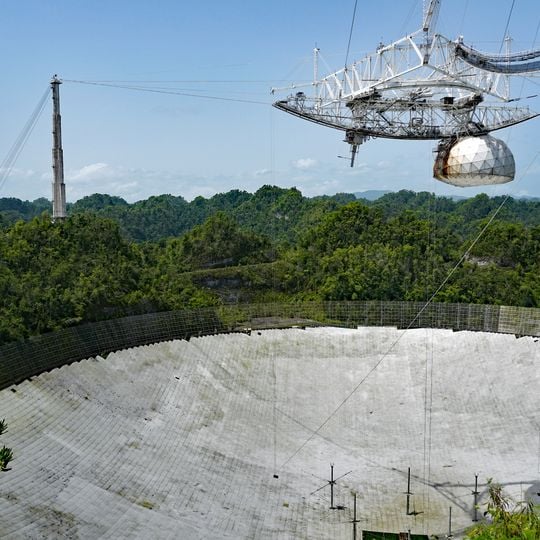
Arecibo Radio Telescope, Radio telescope in Arecibo, Puerto Rico
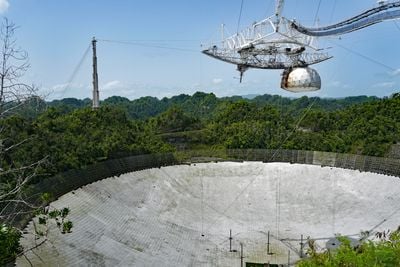
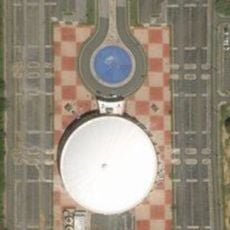
The Arecibo Radio Telescope was an astronomical observatory built inside a natural limestone sinkhole in northern Puerto Rico. The reflector dish consisted of 38,778 individual aluminum panels supported by a network of steel cables and measured 305 meters (1,000 feet) across.
The facility began operations in 1963 and remained the world's largest single-aperture telescope until China's FAST telescope surpassed it in 2016. After several cable failures, the instrument platform collapsed into the reflector dish in December 2020, ending its active research phase.
Scientists used the facility to send the first intentional radio message to potential extraterrestrial civilizations in 1974, targeting the globular cluster Messier 13. This broadcast contained basic information about humanity and our solar system.
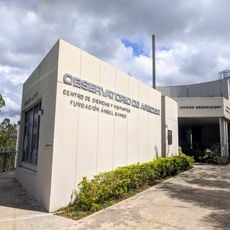
The National Science Foundation established an education center at the former site, offering science programs and computational skills training. Visitors can learn about the past research and the future of radio astronomy.
Researchers used the facility to determine Mercury's rotation period accurately, correcting earlier assumptions about its motion. The installation also conducted the first radar observations of several asteroids before it collapsed in late 2020.
The community of curious travelers
AroundUs brings together thousands of curated places, local tips, and hidden gems, enriched daily by 91,181 contributors worldwide.