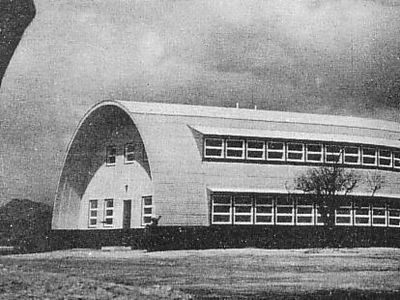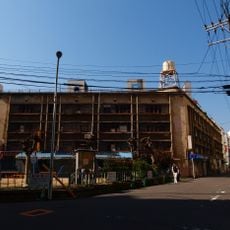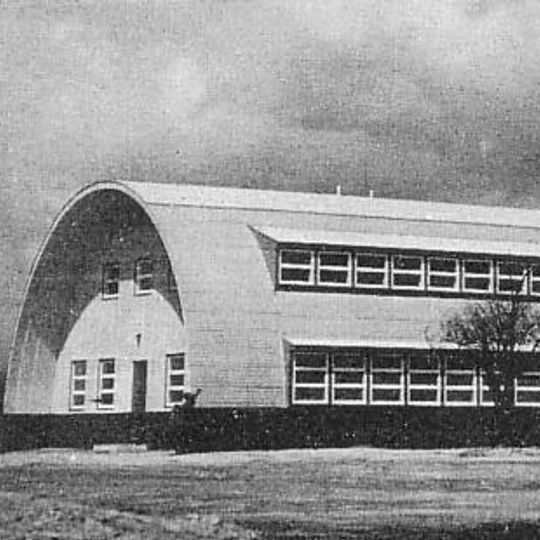
Atomic Bomb Casualty Commission, Research commission in Washington DC, United States.
The Atomic Bomb Casualty Commission was a research organization based in Washington DC that conducted medical examinations of atomic bomb survivors. It gathered extensive data through regular health evaluations, maintaining detailed records of how radiation affected the studied population.
President Harry S. Truman established this commission in 1946 through the National Academy of Sciences to investigate long-term radiation effects on atomic bomb survivors. It operated for several decades, documenting medical outcomes across time.
The commission's work reflected contrasting approaches between American scientific methods and Japanese medical traditions during the postwar era. These differences shaped how the research was conducted and understood by local communities.
The work required regular visits from survivors for medical tests and interviews, which created an organized system of data collection. Visitors can understand how large-scale research projects were organized and carried out during this period.
The commission studied survivors over many years but never provided medical treatment to any of them. This meant the research experience was often frustrating for participants who expected some form of care.
The community of curious travelers
AroundUs brings together thousands of curated places, local tips, and hidden gems, enriched daily by 92,320 contributors worldwide.