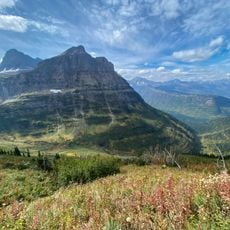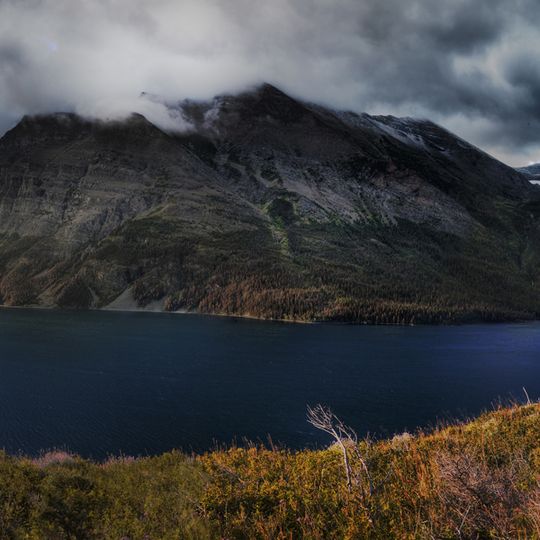
Saint Mary Lake, Lake in Glacier National Park, Montana, US
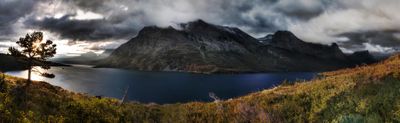
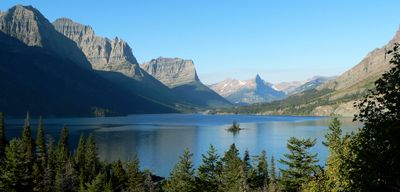
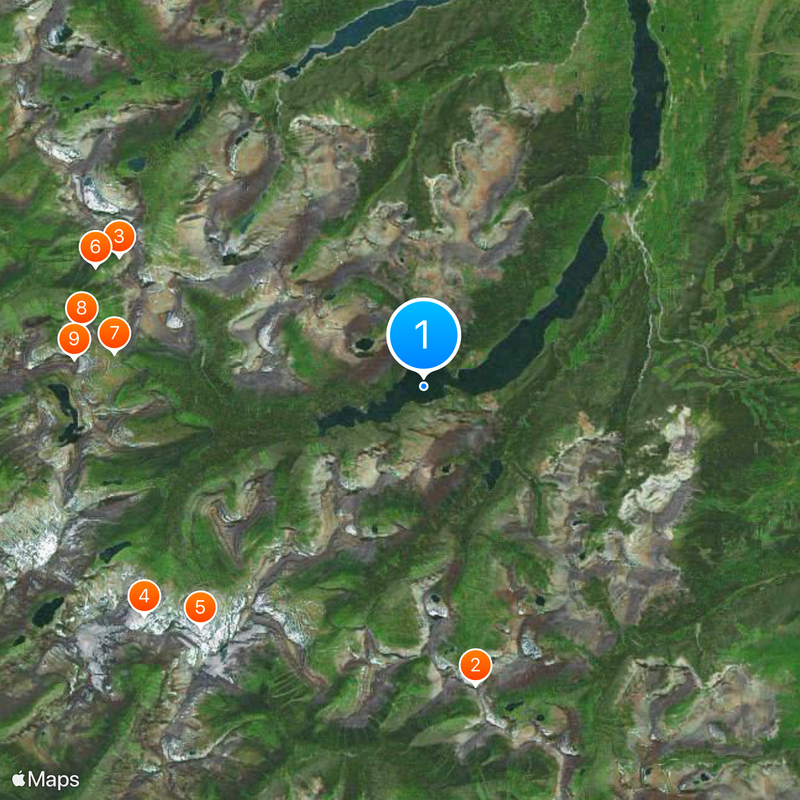
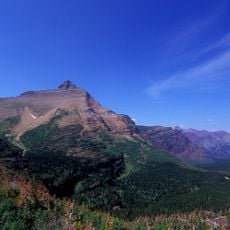
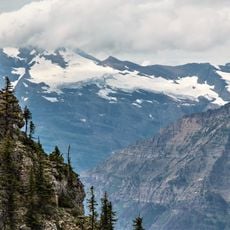
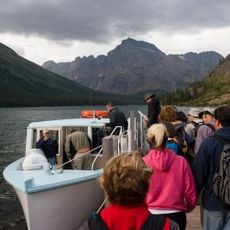
Saint Mary Lake is the second-largest lake in Glacier National Park, Montana, 9.9 miles (15.9 km) long, 300 feet (91 m) deep and covering 3,923 acres (15.88 km2) at 4,484 feet (1,367 m) elevation. Going-to-the-Sun Road runs along its north shore, and Little Chief Mountain rises above the west end. Wild Goose Island, a cluster of conifers only 14 feet (4.3 m) above the water, sits in the lake.
Hugh Monroe, born in Quebec in 1798, is credited by some accounts with being the first white man to see the St. Mary lakes, possibly around 1814-1815 while travelling south with Chief Lone Walker's band; other historians place the sighting no earlier than 1836. In 1853-1854 James Doty, surveying a railway route along the 47th parallel, recorded the lower lake as the "well-known lake of Chief Mountain" and called the upper one "upper St. Mary".
The name comes from early exploration: James Doty, surveying for a railroad along the 47th parallel, called the upper lake "St. Mary" while the lower one was already known as the "well-known lake of Chief Mountain." Hugh Monroe, born in Quebec in 1798 and sent to live with the Pikuni, may have been the first white man to see the lake around 1814-15.
Going-to-the-Sun Road runs along the lake's north shore, so the water is seen from the car or from roadside pullouts; the west end lies below Little Chief Mountain. The lake is 9.9 miles (15.9 km) long, and its water rarely rises above 50 °F (10 °C). In winter it often freezes over with ice up to 4 feet (1.2 m) thick.
Wild Goose Island rises only 14 feet (4.3 m) above the water, yet it is one of the most photographed spots along Going-to-the-Sun Road. The opening aerial shot of Stanley Kubrick's 1980 film The Shining sweeps over the lake and this island.
The community of curious travelers
AroundUs brings together thousands of curated places, local tips, and hidden gems, enriched daily by 95,825 contributors worldwide.