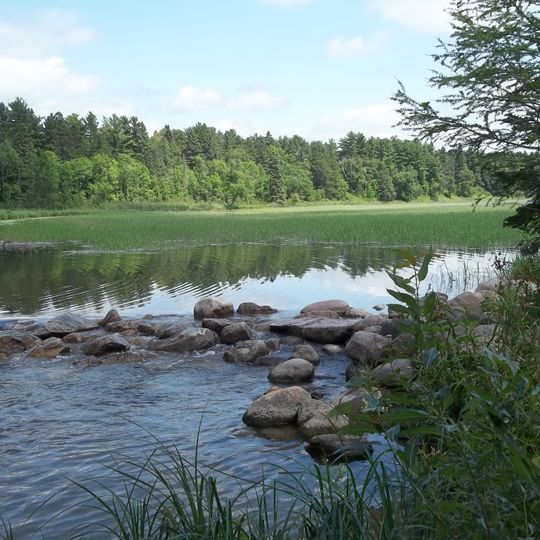
Lake Itasca, Glacial lake in Clearwater County, Minnesota.
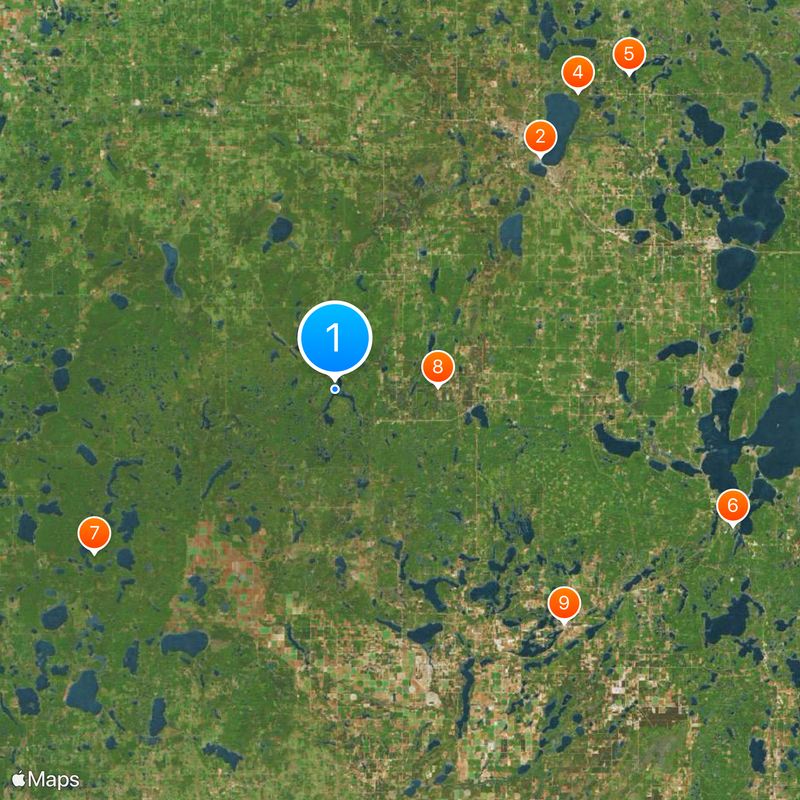
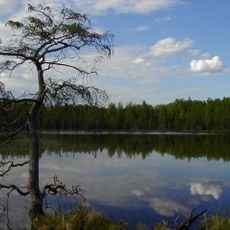
Lake Itasca is a glacial lake of about 4.7 square kilometres (470 hectares) in Itasca State Park, south-eastern Clearwater County, Minnesota. It lies at 450 metres above sea level and is 5 to 10 metres deep. Its western arm is fed by Nicollet Creek, which rises in a nearby spring, and by a small stream from Elk Lake.
Henry Schoolcraft confirmed Lake Itasca as the source of the Mississippi River in 1832, after William Morrison first explored the area in 1804. The recognition of the lake as the origin of the longest river in the United States made it a reference point for 19th-century geography and cartography.
The Ojibwe named this water body Omashkoozo-zaaga'igan, meaning Elk Lake, before French Canadian explorers called it Lac Labiche. The current name was coined by Henry Schoolcraft, who combined Latin terms into an invented word that references the true source.
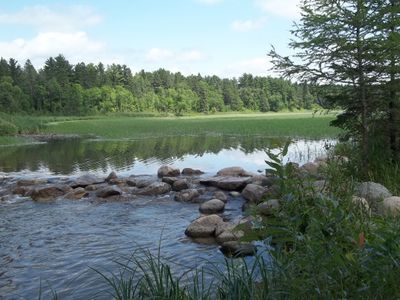
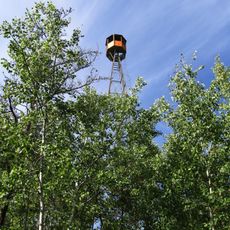
Visitors can reach the headwaters of the Mississippi River through stepping stones at the lake's outlet, located within Itasca State Park. The trails around the lake lead through forest and offer different viewpoints, with main paths easy to walk during the summer months.
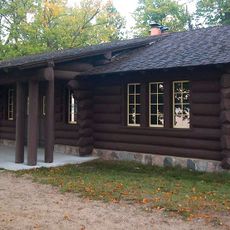
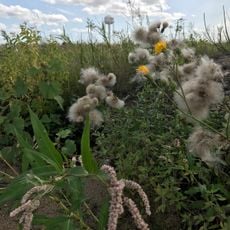
The University of Minnesota maintains a biological research station at this location, conducting year-round studies of the three converging ecosystems. Scientists observe at this site how boreal forests, prairie, and temperate deciduous forests meet and interact.
The community of curious travelers
AroundUs brings together thousands of curated places, local tips, and hidden gems, enriched daily by 93,323 contributors worldwide.