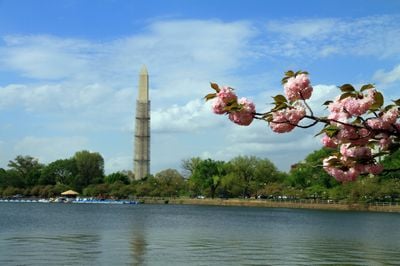
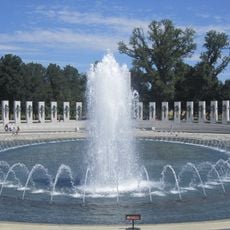
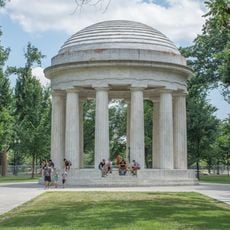
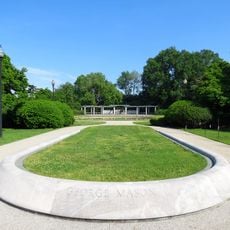
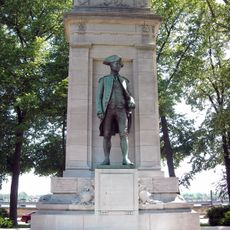
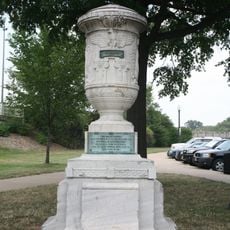
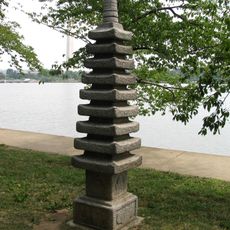
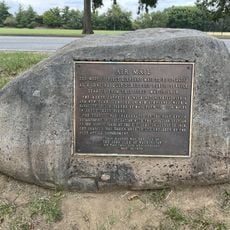
Tidal Basin, Reservoir and inlet in West Potomac Park, United States.
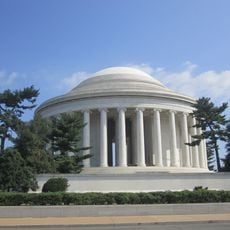
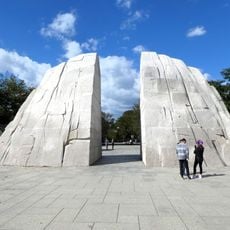
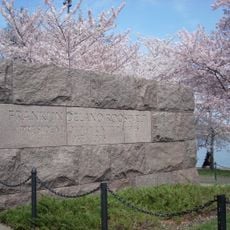
Tidal Basin is an artificial water reservoir in West Potomac Park in Washington D.C. that links the Potomac River with the Washington Channel. The body of water has an oval shape with a wide shoreline path lined by Japanese cherry trees and surrounding several national memorials.
The site was created in the late 19th century as an engineering solution to combat silting in the nearby channel, with water moved by tidal action. The name changed from Tidal Reservoir through Twining Lake back to its current name, while the memorials around the shore were added throughout the 20th century.
The name comes from the basin's tidal function, not from flushing: water enters at high tide and drains into the Washington Channel as it ebbs. The 1912 gift of cherry trees from Japan, planted by First Lady Helen Taft and the wife of Ambassador Sutemi Chinda, is marked each April by the National Cherry Blossom Festival.
The shoreline path is easy to walk and suitable for strolling at any time of day, with early mornings or late afternoons being less crowded. In springtime it can become very busy, so visiting on weekdays helps avoid the crowds.
The inlet gates on the Potomac side open at high tide while the outlet gates on the Washington Channel side close, storing water; as the tide ebbs, the outflow shuts the inlets and forces the outlets open, and the rush into the channel sweeps away built-up silt. The Corps of Engineers designed the Basin to release 250 million US gallons (950,000 m3) twice a day.
The community of curious travelers
AroundUs brings together thousands of curated places, local tips, and hidden gems, enriched daily by 94,625 contributors worldwide.