Field Museum of Natural History, Natural history museum in Chicago, United States
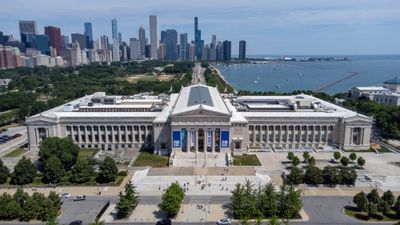
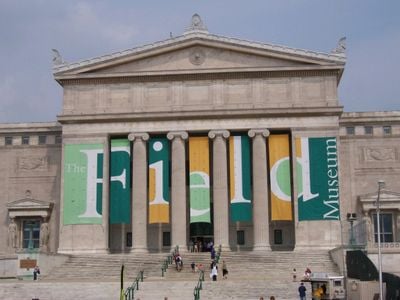
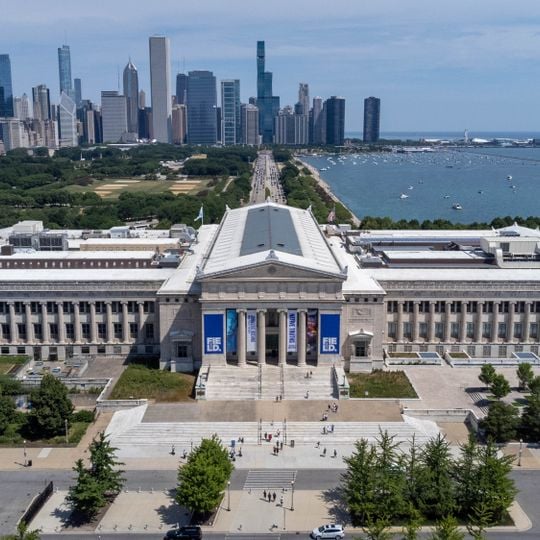
The Field Museum of Natural History is a natural history museum in Chicago housing collections from paleontology, anthropology, geology and zoology. The building extends over multiple floors with exhibition halls displaying dinosaur bones, gemstones, tools from ancient cultures and preserved animals from around the world.
The Field Museum was incorporated by the State of Illinois on September 16, 1893, to keep the collections assembled for that year's World's Columbian Exposition, and opened as the Columbian Museum of Chicago in Jackson Park's Palace of Fine Arts. It was renamed in 1905 for benefactor Marshall Field, and in 1921 moved to Daniel Burnham's neoclassical building on Chicago Park District land near downtown.
The Inside Ancient Egypt exhibition displays 23 human mummies and many mummified animals. It includes a three-story replica of the mastaba tomb of Unas-Ankh, son of Unas, the last pharaoh of the Fifth Dynasty, with two authentic rooms holding 5,000-year-old hieroglyphs.
The museum opens daily in the morning and closes in the late afternoon, with halls usually quieter if you arrive right at opening time or on weekdays. All areas are equipped with elevators and ramps, so everyone can reach the exhibitions.
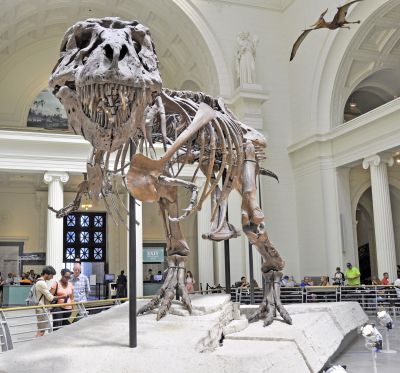
The central hall houses SUE, a fully preserved Tyrannosaurus rex skeleton that is over 12 meters (40 feet) long and lived more than 67 million years ago. Visitors can walk around the skeleton and view the shape of the bones, the size of the teeth and the posture of the body from every angle.
The community of curious travelers
AroundUs brings together thousands of curated places, local tips, and hidden gems, enriched daily by 92,321 contributors worldwide.