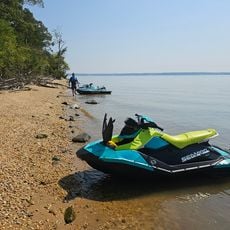
Aquia Formation, Geological formation in Delaware and Maryland, United States
The Aquia Formation is a geological layer spanning the mid-Atlantic coastal plain, containing beds of greensand marl and glauconitic quartz sand from the Paleocene and early Eocene. Scientists study it to examine diverse marine fossils preserved within its sedimentary layers.
W.B. Clark first documented the formation in 1895, revealing marine sediments from the Paleocene and early Eocene periods. The layers provide insights into ocean conditions and life in eastern North America millions of years ago.
Local universities conduct regular field studies here, teaching students about paleontology and geological processes through hands-on work. These sites serve as outdoor classrooms where the deep past becomes tangible for learners.
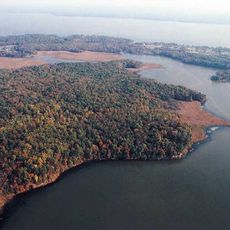
The formation stretches across multiple states with research stations at various sites where scientists collect samples and conduct studies. Visiting with a guide or expert helps you understand the geological layers and navigate the exposures safely.
The formation holds specific geological markers that document the transition between the Paleocene and Eocene in North America. These boundary layers are globally significant for understanding major shifts in climate and life.
The community of curious travelers
AroundUs brings together thousands of curated places, local tips, and hidden gems, enriched daily by 60,000 contributors worldwide.