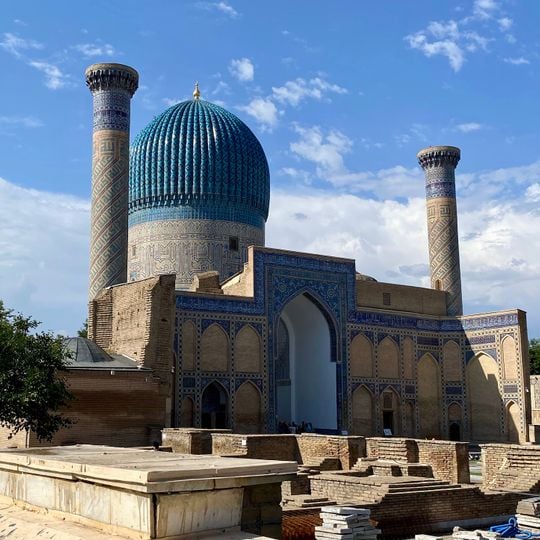
Gur-e Amir, Royal mausoleum in Samarkand, Uzbekistan
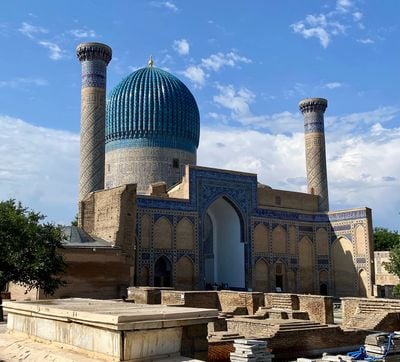
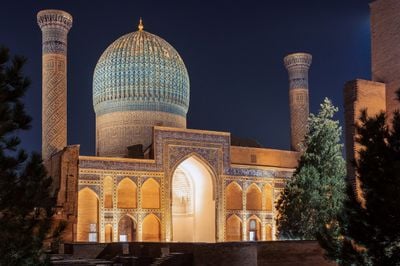
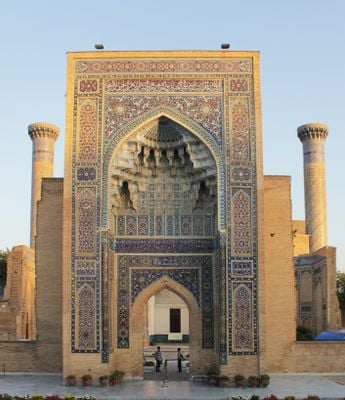
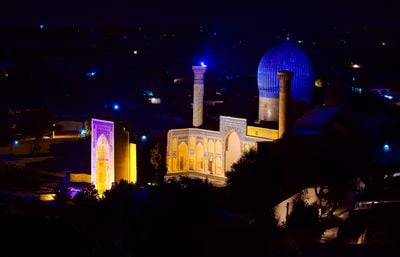
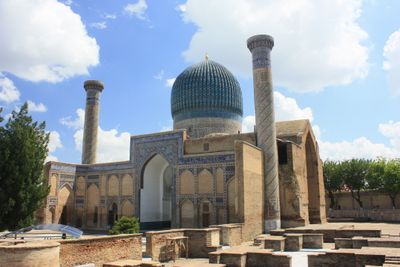
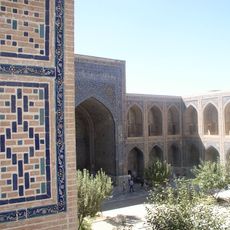
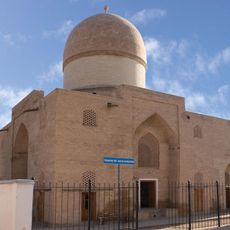
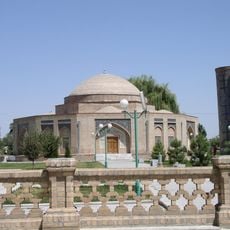
Gur-e Amir is a royal mausoleum in Samarkand, Uzbekistan, featuring a massive double dome covered in light and dark blue tiles. The entrance portal displays geometric patterns and calligraphic inscriptions, while the outer walls carry glazed tiles in different shades of blue.
The building was erected in 1403 as a burial site for Timur's grandson and became the ruler's own resting place shortly after when he died in 1405. Timur had created an empire stretching from Turkey to India, and the mausoleum became a symbol of his dynasty.
The name means "Tomb of the Ruler", and visitors today see how Timurid builders combined Persian decorative traditions with Central Asian structural techniques in one space. The interior chamber shows how craftsmen used contrasting materials like jade-green onyx and dark marble to create a solemn atmosphere for prayer and reflection.
Visitors can explore both the exterior decorations and the interior chamber, where carved marble sarcophagi rest beneath ornate canopies. The actual graves lie in a crypt below the floor level, directly beneath the visible sarcophagi.
Soviet archaeologists opened Timur's tomb in 1941 despite local warnings of a curse, which coincided with the Nazi invasion of the Soviet Union. The body was later reburied with military honors after some soldiers insisted on the old warning.
The community of curious travelers
AroundUs brings together thousands of curated places, local tips, and hidden gems, enriched daily by 90,777 contributors worldwide.