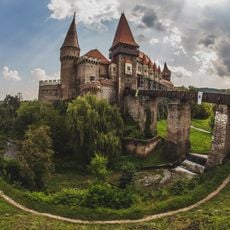
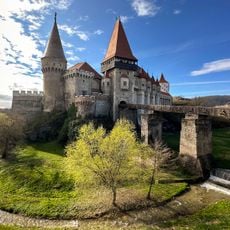
Fortress of Deva, Medieval castle ruin in Deva, Romania
Fortress of Deva is a stone castle built on a volcanic hill that rises about 250 meters above the town and overlooks the Mureș valley below. The structure has thick walls that once protected it, and its location still offers wide views across the surrounding landscape.
The fortress was first documented in 1269, when the young king Stephen, son of Béla IV, donated land to Count Chyl of Câlnic for bravery in a battle beneath its walls. By the end of the 13th century it was the residence of voivodes Roland Borșa and Ladislau Kán. In 1444 it passed to John Hunyadi, and in 1849 a powder magazine explosion destroyed most of it.
The fortress's prison held Ferenc Dávid, founder of the Unitarian Church in Transylvania, who died there on 15 November 1579. István Dobó, the hero of Eger, was also imprisoned here on Queen Isabella's orders. General Basta later planned to execute Transylvanian nobles in the same prison.
The fortress stands on Citadel Hill, a 378-metre volcanic cone above Deva. The climb follows a steep path; the hill's rocky, partly wooded slopes and the ruined walls offer no shelter, so carry water and wear sturdy shoes. The site is a protected historic monument (code HD-II-a-A-03216).
The walls show traces of construction from the 13th to 17th centuries, so visitors walking through the ruins can spot different building styles and periods layered together. These traces reveal how defensive techniques changed over time as threats and technologies evolved.
The community of curious travelers
AroundUs brings together thousands of curated places, local tips, and hidden gems, enriched daily by 93,054 contributors worldwide.