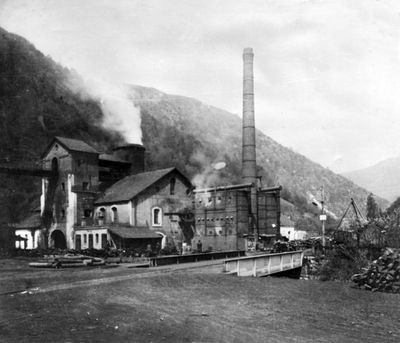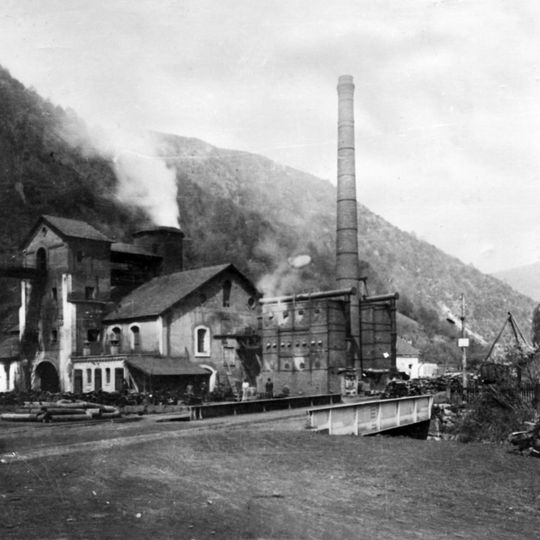
Govăjdia Blast Furnace, Industrial heritage site in Govăjdia, Romania
Govăjdia Blast Furnace is an industrial heritage site at the western edge of Govăjdia village in Ghelari, Romania. The complex shows a rectangular stone building with workshop structures and preserved technical installations from the early 19th century.
Emperor Francis I of Austria ordered the construction of the facility between 1806 and 1810 as a production site for pig iron. It introduced at that time a new process in which the furnace ran continuously without needing regular cooling.
The name of the place points to old ties between iron and the region, which visitors today can trace in the preserved walls and technical elements. Hikers often discover details of the furnace structure that show how craftsmen in the early 19th century worked with great precision.
Access follows a narrow-gauge railway line that starts from Teliucu Superior and leads to the site. Visitors should wear sturdy shoes and allow enough time for the walk along the old tracks.
Cast iron pieces from this facility reached France and were used there in the manufacturing for the Eiffel Tower. The connection between a remote valley in Transylvania and a Parisian landmark surprises many visitors.
The community of curious travelers
AroundUs brings together thousands of curated places, local tips, and hidden gems, enriched daily by 91,863 contributors worldwide.