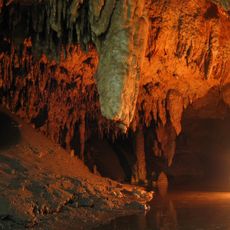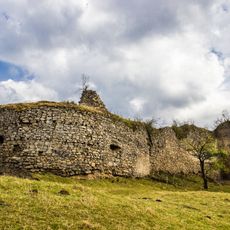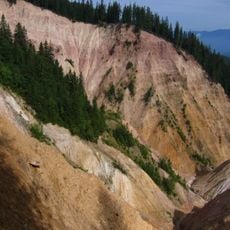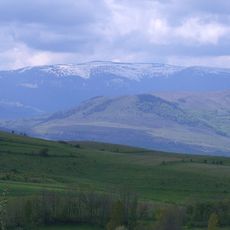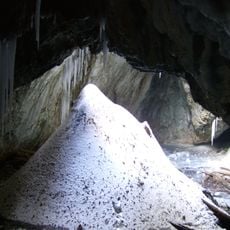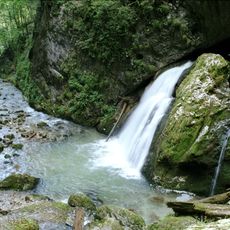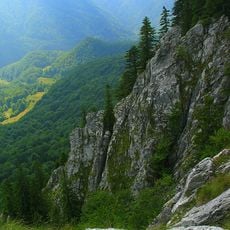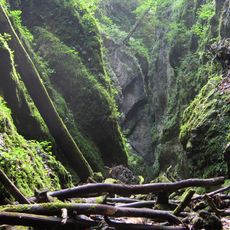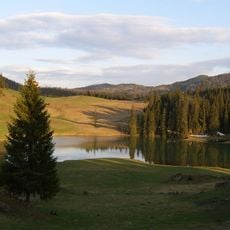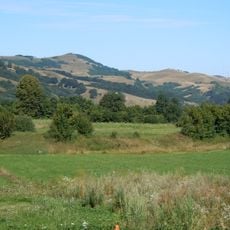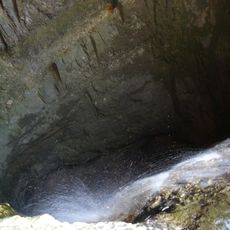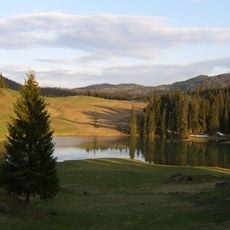
Meziad cave, Show cave in Padurea Craiului mountains, Romania.
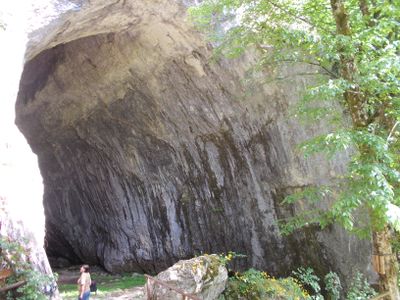
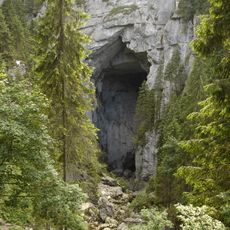
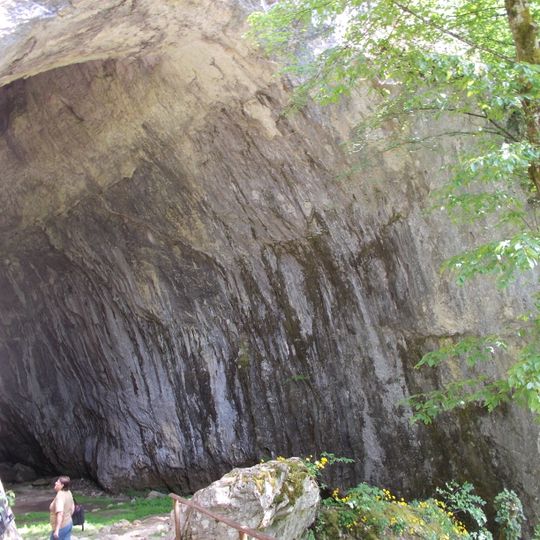
Meziad cave lies in the Pădurea Craiului mountains at 297 m altitude, with an entrance 16 m high and 10 m wide. Its lower level has galleries 20–30 m wide and 15–20 m high that narrow after about 400 m; the upper level, 3,208 m long, connects through three zones, and at the Natural Bridge the two levels stack to a height of 35 m.
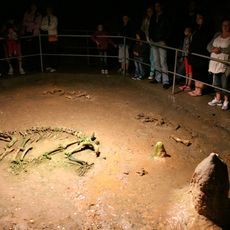
Gyula Czárán (1847–1906), a Hungarian naturalist, opened up the cave, marked it with signs and steps and wrote its first description; his memorial plaque stands in the entrance hall, and the cave was long called the Czárán cave. Excavations in the early 20th century found many bones of the extinct cave bear (Ursus spelaeus) in the so-called Bone Hall. In 1921 a geological team led by Emil Racoviță visited, and the cave was redeveloped and reopened to tourism in 1972.
The cave is also called Czárán-barlang after Gyula Czárán (1847–1906), the naturalist who opened it up and made it walkable; his memorial plaque stands in the entrance hall. A local legend says that in ancient times people lived not in the village but inside the cave.
The pathway through the cave is marked with signs and some sections have steps or handrails to guide visitors safely. Wearing sturdy shoes is important since the ground can be uneven and damp, and the temperature inside stays quite cool year-round.
The upper level, 3,208 m long, meets the lower gallery at three points: the Descending Gallery, the Junction Gallery and the Devil's Throat. Where the two levels overlap at the Natural Bridge, the cavern reaches a total height of 35 m. The cave also shelters a large colony of Schreiber's bats in the Bat Hall.
The community of curious travelers
AroundUs brings together thousands of curated places, local tips, and hidden gems, enriched daily by 93,499 contributors worldwide.