Duma, Mountain peak near Sverdlovsk Oblast, Russia.
Duma is a mountain summit in the Ural Mountains within Sverdlovsk Oblast, characterized by steep slopes and rock formations typical of this mountain chain. The peak displays multiple layers of stone that reveal the geological evolution of the Ural region.
In the mid-1st millennium BCE, the summit held the largest metallurgical centre of the Urals, where the Itkul culture smelted copper in clay furnaces ringed by an earthen rampart and wooden wall. Copper ore from the mines at the south-western foot was sent to Verkhoturye and Tobolsk in 1702, and regular extraction began in 1708. The Polevskoy copper-smelting plant operated below the hill from 1724 to 1930.
The name Duma is linked to local legends: one holds that rebellious workers gathered on the hill to deliberate, another that Pugachev's men saw three horsemen and a phantom army and "changed their minds". Before the revolution, religious processions with icons climbed the hill on church holidays to the Ascension chapel, demolished in the 1920s; in 2011 a six-metre votive cross was raised on its site.
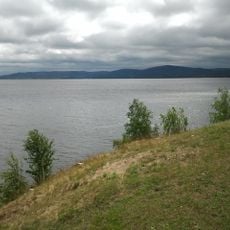
The flat, birch-wooded summit rises in the old part of Polevskoy on the right bank of the Polevaya River; its western slope drops steeply to the water while the northern slope is gentler. The mountain and its surroundings have been protected as a nature monument since 1960, with a protected area of 3.5 hectares. A six-metre worship cross stands on the summit where the Ascension Chapel was demolished in the 1920s.
The flat, birch-covered top was chosen by Itkul-culture smelters because it caught the wind, letting simple furnaces work without bellows. Excavations in the 1950s and 1980s found traces of copper smelting and remains of furnaces from the 3rd–2nd centuries BC.
The community of curious travelers
AroundUs brings together thousands of curated places, local tips, and hidden gems, enriched daily by 94,211 contributors worldwide.