Tataria Nuclear Power Station, Nuclear power station ruins in Tatarstan, Russia.
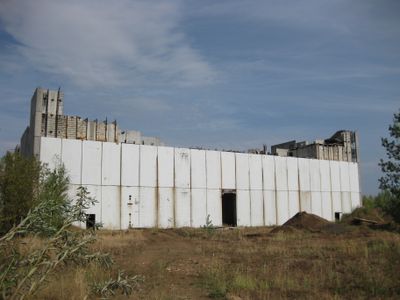
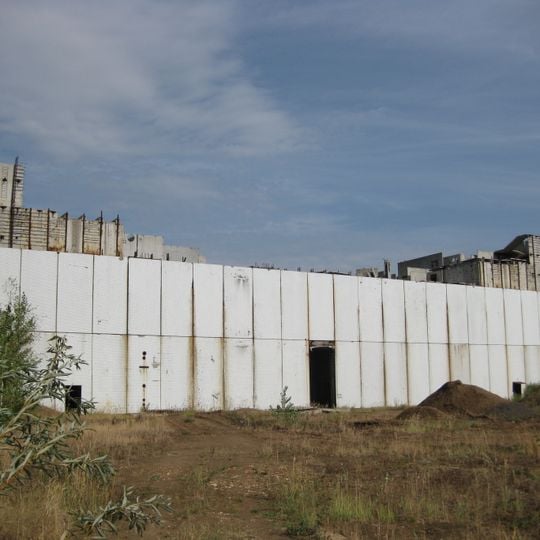
The Tataria Nuclear Power Station is an unfinished facility in Tatarstan with multiple empty reactor buildings and support structures across a large industrial site. The concrete structures stand side by side, showing the scale of an ambitious Soviet-era energy project.
The Soviet leadership discussed a plant in the Tatar ASSR from 1978 to power KamAZ and the Nizhnekamsk chemical and tyre works. Preparatory work began in 1980, official construction on 1 February 1982, and the first bucket of soil at unit 1 was lifted on 19 March 1986. After Chernobyl and growing protests, the Council of Ministers decided on 26 October 1989 to stop the project; work ended in April 1990, and the cancellation was formalised on 1 December 1993.
The plant was designed by the Riga branch of Atomteploelektroproekt, and its VVER-1000/320 reactors were the same type later used at Temelín in the Czech Republic. The site was laid out for up to eight blocks, with a closed water-cooling system and a large reservoir similar to Chernobyl's. After construction stopped, the unfinished foundations were drained of groundwater in 2003, but lack of funds prevented any resumption.
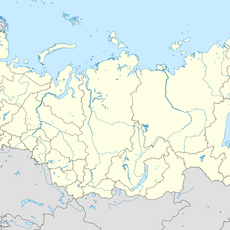
The unfinished plant lies near the village of Achi, about 50 km from Nizhnekamsk and close to Kamskiye Polyany on the Kama. The site is fenced and guarded; there is no public access. In 2003 groundwater was pumped out of the foundations, but no construction followed.
The site was laid out for up to eight VVER-1000 reactors, though only four were planned initially. After the 1990 halt, groundwater was pumped out of the foundations in 2003, but lack of funding stopped any resumption.
The community of curious travelers
AroundUs brings together thousands of curated places, local tips, and hidden gems, enriched daily by 94,088 contributors worldwide.